Wire Harness Selection Parameters: Conductor, Shielding, and Waterproof Ratings Explained
A custom wire harness is defined by a parameter set, not by a part number. For equipment running 24/7, the parameters that decide field behaviour are conductor and insulation selection, shield construction, flame-retardant and low-smoke halogen-free options, sealing method, and temperature class. Every one of them must be written onto the drawing, because any parameter left open will be filled in by the supplier — usually with the cheapest option that still satisfies the visible requirement.
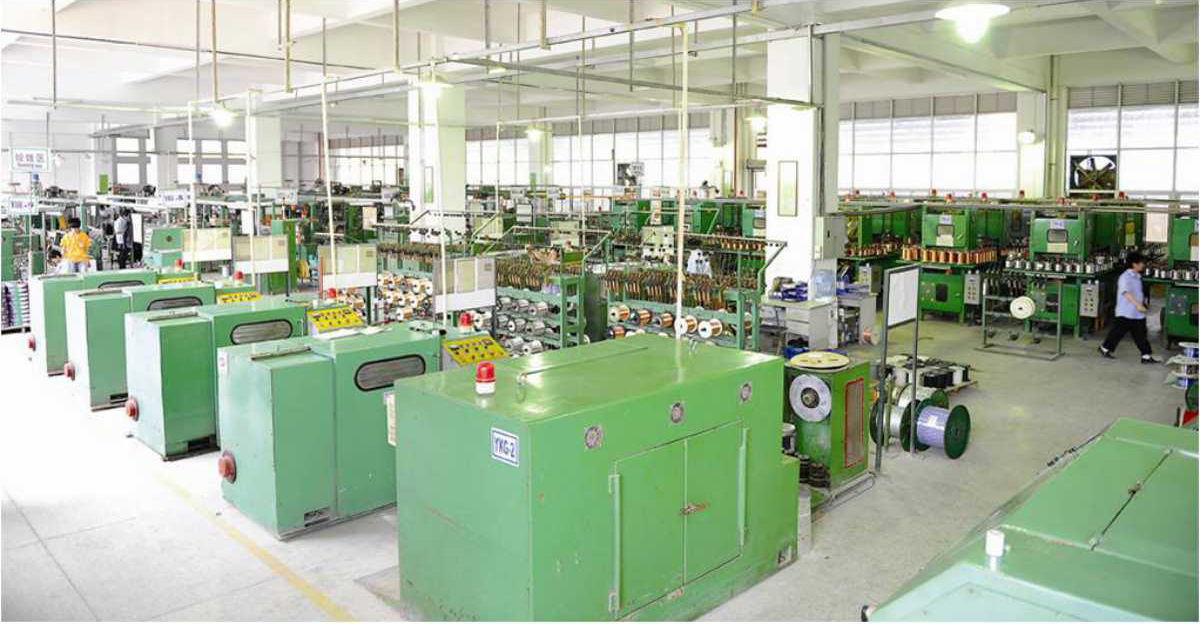
This guide is written for specifiers at the research and evaluation stage: engineers, procurement teams and brand owners who already have a drawing or a prototype and need to convert it into a purchase specification that can be quoted, built and inspected. It uses two published technical baselines — UL 758 Appliance Wiring Material and DIN EN 50525-2-11 (VDE 0285-525-2-11) — alongside the in-house capability of P-Shine Electronics Co., Ltd, a Dongguan-based cable and harness manufacturer established in 1997 that runs 7 independent factories covering wire harness, cable assembly, connector, copper wire processing and insulation materials.
Problem Definition: Why Parameter Gaps Surface After Installation
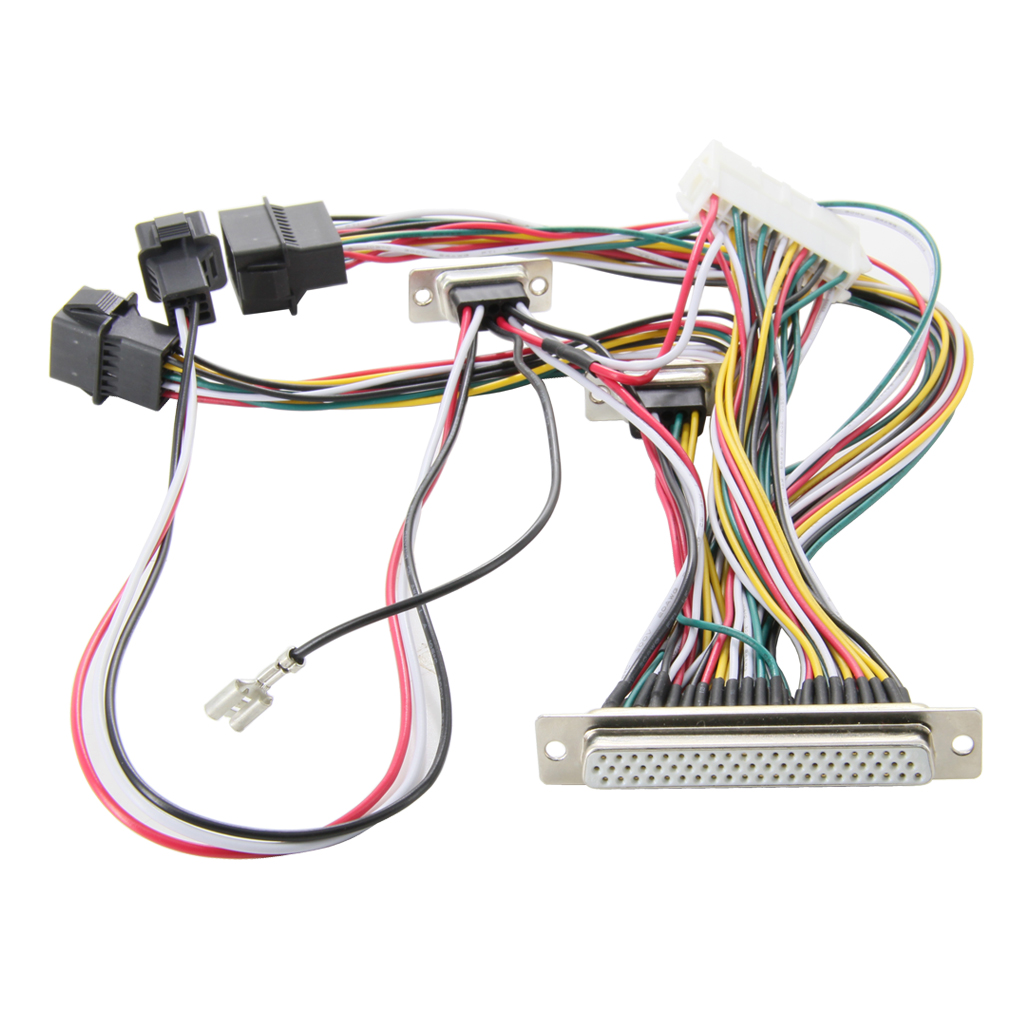
Most harness failures in continuously operating equipment are not connector failures. They are parameter failures. A strand construction that work-hardens at a tight bend radius. A shield that was terminated at one end only. A PVC jacket sitting close to a heat source nobody documented. A sealed connector that survives a splash test but lets moisture wick through the conductor bundle by capillary action. None of these appear in a short functional test at the end of the line, and none of them can be quoted accurately if the drawing says only 'wire harness, six circuits'.
The commercial problem mirrors the technical one. Two suppliers can quote the same drawing with a wide price gap purely because they read the open parameters differently: a different wire style, a different shield format, a different sealing method, a different connector source. The buyer sees a lower price and assumes an efficiency difference, when in reality it is a specification difference that will be discovered during service.
The practical answer is to treat a customized wire harness as a specification exercise rather than a purchasing transaction. When conductor, insulation, shielding, flame behaviour, sealing and temperature class are all stated — and traceable to a recognised baseline — quotes become comparable, samples become meaningful, and the acceptance criteria for mass production become inspectable.
Industry Background: Which Baselines Govern the Parameter Set
The global wire harness market was estimated at USD 99.58 billion in 2024, with Asia Pacific holding a 46% share of that market, according to Precedence Research. Growth of that scale means more specifiers, more drawings and more suppliers reading the same documents — which is exactly why the parameter language has to be standardised rather than improvised.
Two layers of documentation matter. The first is the acceptance framework: IPC/WHMA-A-620 is the industry-consensus standard for requirements and acceptance of cable and wire harness assemblies, and it separates assemblies into Classes 1, 2 and 3 according to the consequences of failure. The second layer is the wire construction itself. In North America, UL 758 Appliance Wiring Material governs single-conductor and multi-conductor thermoplastic and thermosetting-insulated wire. In the EU, DIN EN 50525-2-11 (VDE 0285-525-2-11) covers flexible cables with thermoplastic PVC insulation.
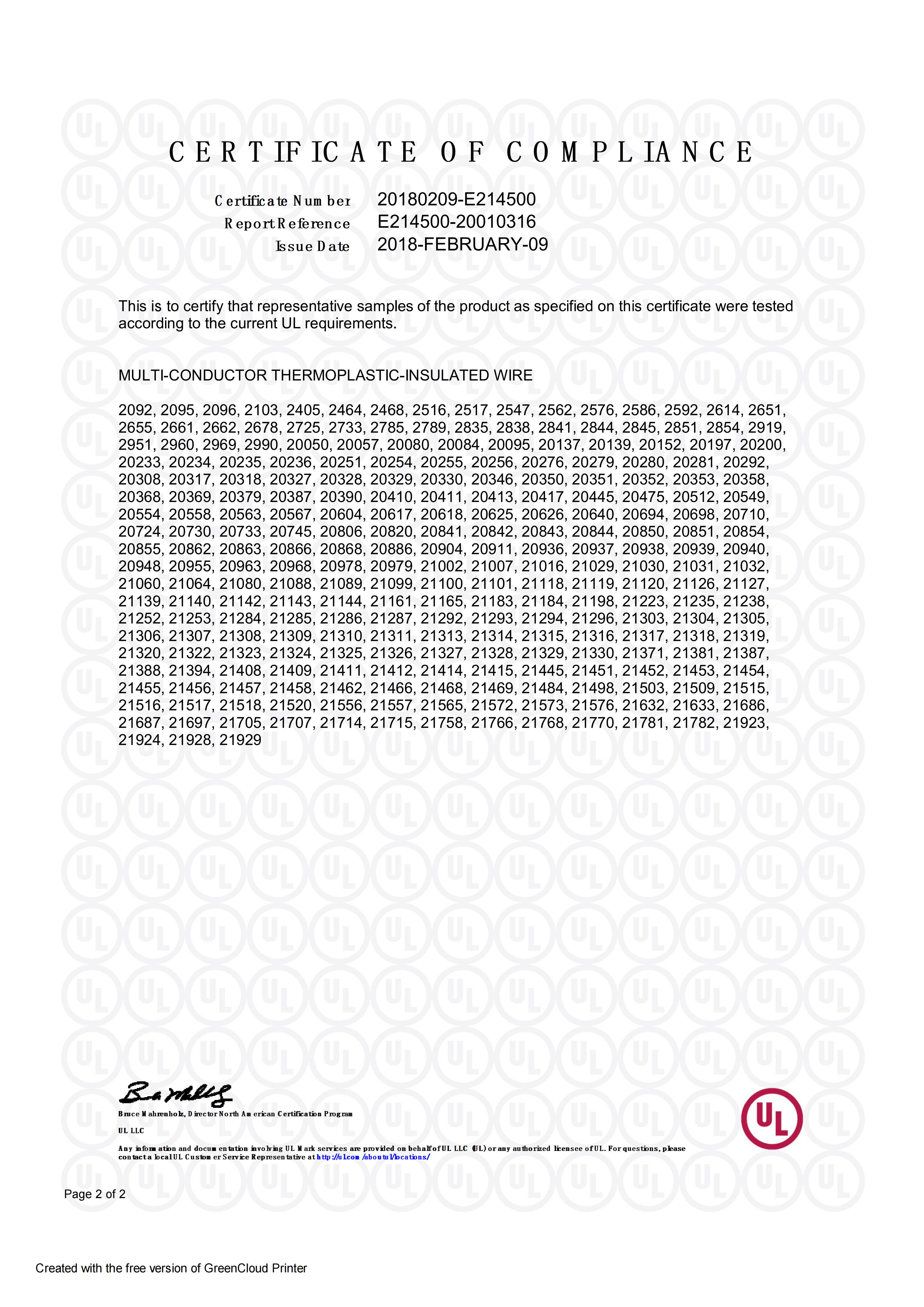
P-Shine Electronics Co., Ltd holds approvals on both sides of that divide: UL certification under file E214500 to UL 758 Appliance Wiring Material, with CSA C22.2 No. 210-15 covering the US and Canadian markets, and VDE certificate 40042054 to DIN EN 50525-2-11 (VDE 0285-525-2-11):2012-01 / EN 50525-2-11:2011 for the EU and German markets. Quality and environmental management sit under ISO 9001:2015 (certificate CN07/31354, issued by SGS United Kingdom Ltd) and ISO 14001:2015 (certificate CN19/30539, also SGS United Kingdom Ltd).
Detailed Solution: The Six Parameter Families That Define a Custom Harness
1. Conductor: wire style, gauge and stranding
Conductor selection starts with three items on the drawing: the wire style, the gauge, and the colour or circuit definition. A typical drawing line reads 'UL1007, 28AWG, red, Power +'. That single line fixes the insulation system, the current-carrying capability and the assembly logic at the same time. Leaving out the style or the gauge pushes the decision to the factory floor.
Gauge follows current, not habit. Signal-level circuits in equipment internal wire harnesses and control looms commonly run small gauges, while a high current power wire harness needs enough copper to limit temperature rise at the terminal. Stranding is the third variable and is the one most often omitted: the same gauge can be built for a static route inside an enclosure or for repeated flexing at a moving joint. For 24/7 duty, the bend radius and the number of flex cycles should be stated so that strand construction and strain relief are chosen together rather than guessed.
2. Insulation and jacket compound: PVC, XL-PE, TPE, TPU or TEFLON
The compound decides temperature capability, flexibility, abrasion resistance and how the harness behaves in contact with oils, cleaning agents or UV. P-Shine works with PVC, XL-PE, TPE, TPU and TEFLON, and the choice is always a trade-off rather than a ranking:
- PVC — the general-purpose baseline for flexible cable, widely used for household appliance wire harnesses and internal wiring where heat exposure is modest.
- XL-PE — cross-linked polyethylene, chosen when the conductor needs more thermal headroom than PVC provides.
- TPE and TPU — chosen for flexibility, feel and abrasion resistance, and frequently used as a jacket on cable assemblies that are handled or flexed.
- TEFLON — chosen for the most demanding thermal and chemical environments, at higher cost.
Because P-Shine operates its own insulation materials factory among the 7 in-house factories, the compound decision is not passed to a third party: it stays inside the same production chain as the harness assembly.
3. Shielding: where the shield starts and where it ends
A shielded wire harness exists to solve an electromagnetic problem, and it only works if the termination is specified. Three parameters must be present on the drawing: the shield format, the coverage expectation, and the ground termination point. Braid, foil with a drain wire, and combined foil-plus-braid constructions are the usual formats, and each behaves differently under flexing and at high frequency.
The most common specification error is a multi-core shielded cable harness drawn with an unshielded connector: the cable shield then has nowhere to terminate, and the assembly provides far less isolation than the drawing implies. Shield termination, drain wire routing and the distance over which the shield is left open are all parameters, and each of them should be visible to the inspector, not left to the operator.
4. Flame retardant and low-smoke halogen-free options
Flame-retardant performance is an optional parameter in most custom drawings, and it should be stated explicitly as either required or not required. When it is required, the specification should say what the requirement is for — resistance to ignition propagation inside an enclosure, or smoke and halogen performance in an occupied space.
Low smoke and halogen-free constructions are specified for enclosed or occupied environments, which is typical of medical equipment wire harnesses and equipment installed where evacuation or sensitive electronics are involved. Halogen-free low-smoke compounds are a different material family, not a coating, and the mechanical properties differ from standard PVC. That is why the drawing should state the requirement and let the supplier confirm the compound, rather than naming a material the buyer has not tested.
5. Waterproof versus non-waterproof ratings
Waterproofing is not a single property. On a waterproof wire harness, moisture can enter through the connector interface, through the cable jacket end, or through the conductor bundle itself. Each path needs its own control: a sealed connector interface with a gasket or a moulded boot, an overmoulded or adhesive-lined transition at the jacket end, and — in exposed routes — a sealing strategy that recognises that stranded conductors can wick moisture along the bundle.
Two rules make this parameter checkable. First, the required ingress protection class should be written on the drawing as an agreed level, together with the test method that will be used to verify it. Second, the sealing method should be named, because 'waterproof' can mean a gasket, an overmould, an adhesive-lined heat-shrink boot or a potted back shell, and each carries different cost, serviceability and rework consequences. Non-waterproof harnesses are not automatically the weaker choice: inside a dry enclosure, an unsealed design is simpler, cheaper and easier to service, and adding seals only introduces new failure points.
6. High-temperature resistance
High-temperature resistance is usually the last parameter to be documented and the first to be blamed. The correct input is not a single number but a location: which part of the harness sits near the heat source, and what the ambient temperature is at that point. A high temperature resistant wire harness may need a different compound only on the affected branch, while the rest of the wiring loom keeps a standard construction.
Two practical checks apply. First, the temperature class must be written on the drawing rather than inferred from the wire style. Second, the branch geometry matters: since a high-temperature zone rarely respects a uniform bundle, the split points and lengths should be dimensioned so the protected section actually covers the hot area.
7. Connector and termination parameters
Every connector should be specified by brand and part number, and every wire in every loop should be distinguished by colour with the pin function defined — Power +, GND, signal and so on. Where the same connector appears in adjacent locations, different colours keep the assembly identifiable during inspection.
Connector sourcing is a separate parameter with a direct cost consequence. P-Shine sources connectors strictly to the brand and part number on the customer drawing, typically through authorised distribution channels such as DigiKey or Mouser, and uses original connectors by default. Non-original alternative connectors are only introduced at the customer's request, after the customer has tested and approved samples — a route that matters commercially because the price of an original brand connector can sometimes be ten times that of a non-original alternative. Crimp quality on a terminal crimped wire harness is verified as part of the 100% test regime rather than by sampling.
Checkable Parameter Table
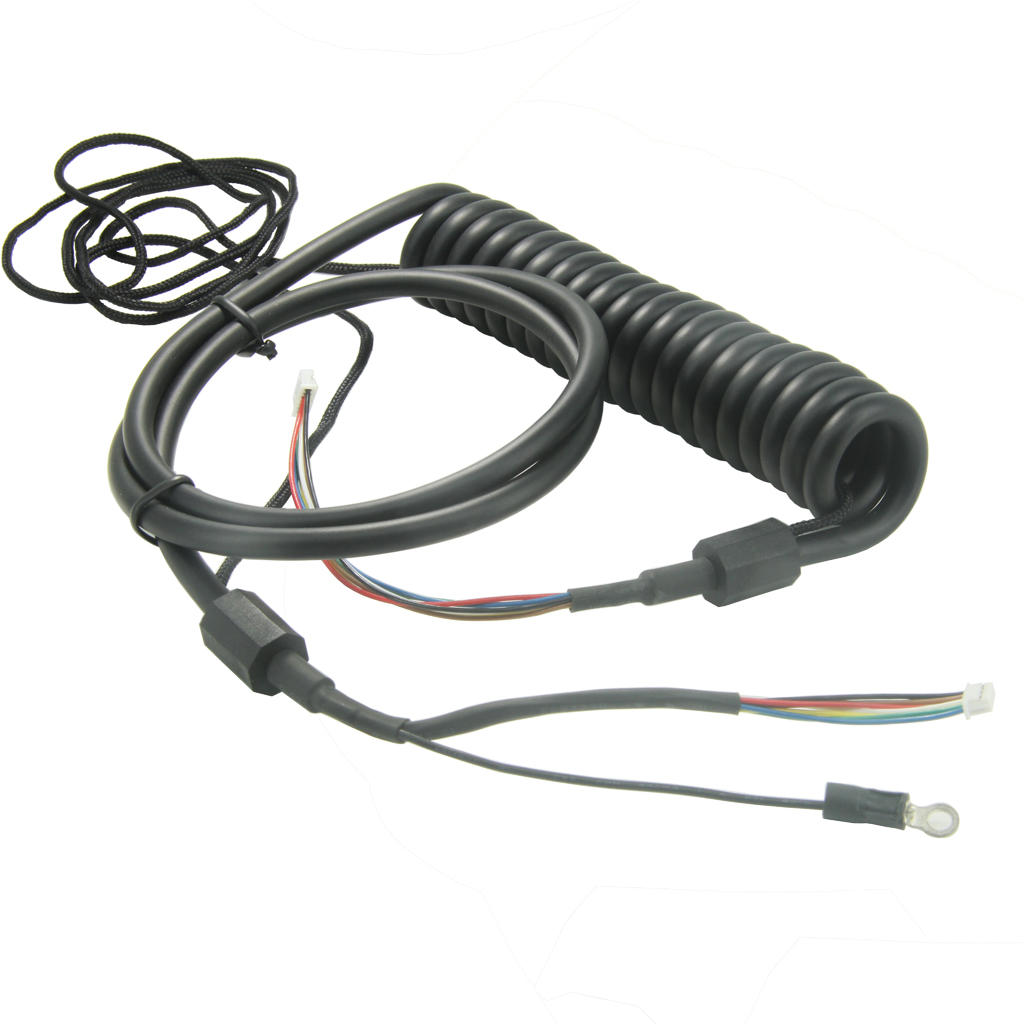
The table below converts the drawing-design discussion into a specification checklist. Every row is a parameter that should be visible on the drawing before a quotation is requested.
| Parameter family | What to state on the drawing | Why it matters under 24/7 duty | Options available |
|---|---|---|---|
| Wire style and gauge | Wire type (e.g. UL1007), gauge (e.g. 28AWG), colour per circuit | Fixes current capability and temperature rise at the terminal | Multiple UL styles, small to high-current gauges |
| Stranding and flex | Static or flexing route, bend radius, flex expectation | Prevents conductor work-hardening at moving joints | Static and flex-capable constructions |
| Insulation compound | PVC / XL-PE / TPE / TPU / TEFLON, per branch if needed | Determines thermal headroom, abrasion and chemical resistance | PVC, XL-PE, TPE, TPU, TEFLON |
| Shielding | Shield format, coverage expectation, ground termination point | An unterminated shield gives no isolation and hides the problem | Braid, foil with drain wire, combined construction |
| Flame retardant / LSZH | Required or not required, and the purpose of the requirement | Smoke and halogen behaviour in enclosed or occupied spaces | Flame-retardant optional; low smoke and halogen-free |
| Sealing | Waterproof or non-waterproof, ingress class, test method, sealing method | Moisture entry path and serviceability both depend on it | Gasket, overmould, adhesive-lined boot, potted back shell |
| Temperature class | Hot-zone location, ambient at that point, affected branch length | Localised heat exposure is the usual root cause of jacket ageing | Compound upgrade on the affected branch only |
| Connector | Brand, part number, original or approved alternative | Determines mating reliability, cost and lead time | Molex, JST, TE, Phoenix, Samtec, Hirose, Amphenol; approved alternatives |
| Geometry | Loop lengths, branch lengths, minimum distance from connector to branch | Controls strain relief and assembly fit | Branch minimum distance 30 mm |
| Verification | Test regime and acceptance criteria | Confirms parameters instead of assuming them | 100% test |
Step-by-Step Breakdown: Turning a Drawing into a Locked Specification
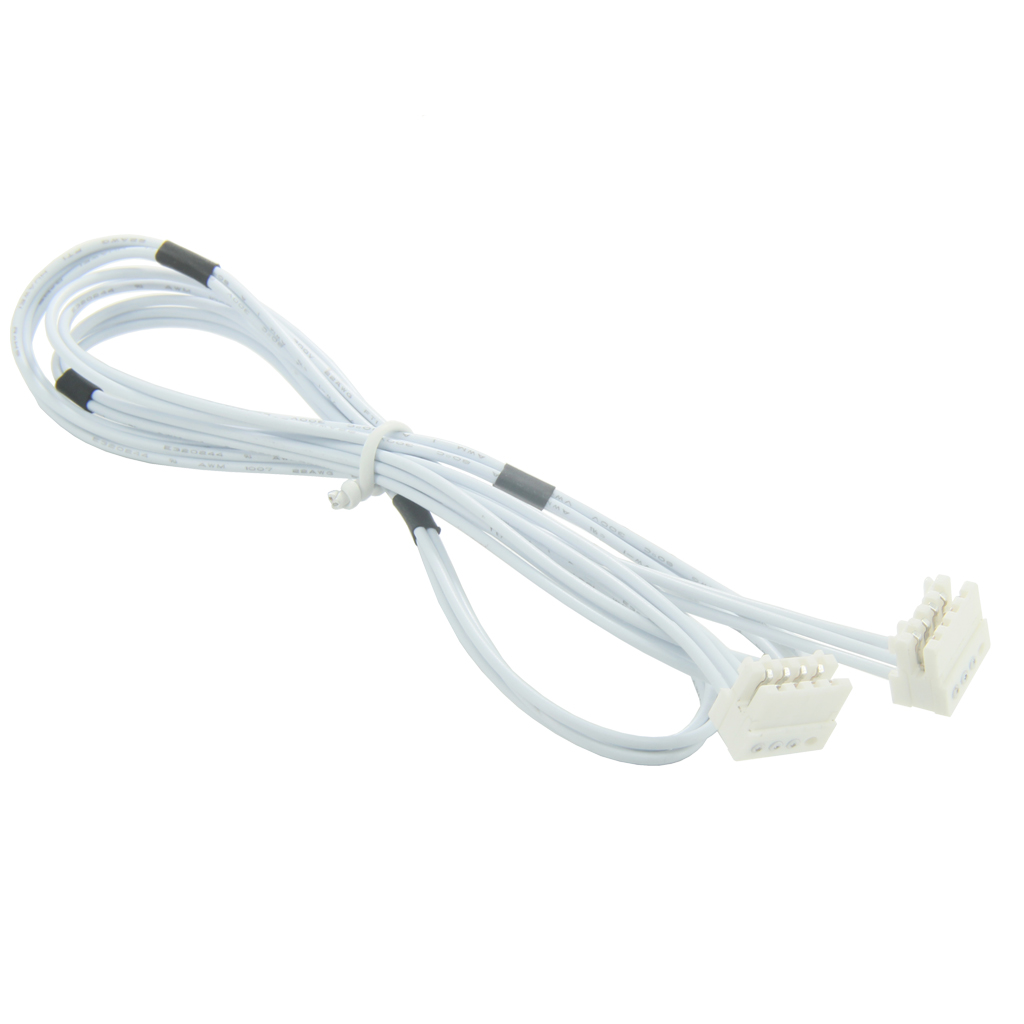
The sequence below reflects the design-to-production route used for custom harness work, adapted from standard harness drawing practice.
- Define the functions and the environment first. List the circuits, state whether operation is 24/7, and record indoor/outdoor use, waterproof or non-waterproof requirement, heat sources and shielding need. These conditions decide the remaining parameters.
- Fix the circuit count and each circuit's function. Assign Power +, GND and signal definitions before choosing hardware, so that the connector pinout is not forced later.
- Select connectors by brand and part number. Where the same connector appears in adjacent positions, differentiate by colour. Decide in advance whether original connectors are mandatory or approved alternatives are acceptable.
- Write the wire specification per circuit. Wire type, gauge and colour for every wire, plus the mechanical length of every loop and every branch. Where a branch exists, dimension each branch separately.
- Set geometry and routing constraints. Keep a minimum distance of 30 mm from the connector to any branch point, and plan heat-shrink positions so the branch layout stays buildable.
- Apply shielding, flame-retardant, low-smoke and temperature decisions only where they are needed. A localised compound upgrade on one branch is usually better than upgrading the entire wiring loom.
- Simulate, sample and test. Complete the drawing, check it against the physical envelope, then build samples and test them against the stated parameters — including the sealing test method, not just continuity.
- Release to production with the verification regime agreed. P-Shine applies 100% test across harness production, with a monthly capacity of 250,000 units, a minimum order quantity of 200 units and a lead time of 30 to 45 days for drawing-based custom work.
Use Cases: Which Parameters Dominate in Which Application
Industrial control wire harness
Control cabinets and automation equipment run continuously, and the dominant parameters are vibration, bend radius at the door hinge or moving axis, and shield termination on signal lines. A multi-core shielded cable harness with the shield bonded at the cabinet entry is a different product from the same cable with a floating shield, even though both are ordered as 'shielded'.
Medical equipment wire harness
In medical devices, low smoke and halogen-free construction and cleanability tend to outrank cost, and sealing becomes a serviceability question as much as an ingress question. A sealed connector that cannot be re-terminated in the field may be the wrong parameter choice even if it meets the ingress requirement.
Household appliance wire harness
Appliance wiring is volume-driven, so the parameter discipline is about not over-specifying: a standard PVC construction, correctly gauged and correctly crimped, usually outperforms an expensive compound applied where it is not needed. Flame-retardant requirement and terminal crimp quality are the two parameters worth spending attention on.
Equipment internal wire harness and wiring looms
Inside an enclosure, the constraints are usually space and assembly sequence rather than environment. Branch lengths, minimum branch distance from the connector and colour coding decide whether the wiring loom can be installed quickly and inspected visually.
High current power wire harness
Power routes shift the priority to gauge, terminal selection and thermal rise at the contact, with sealing added only when the route leaves the enclosure. Here the conductor parameter and the termination parameter have to be specified together, because a gauge chosen without the mating terminal is only half a specification.
In one long-running industrial programme, P-Shine has supplied 250,000 units per month for five years of continuous cooperation, with a near-zero low defect rate and stable equipment operation on the client's production lines — a result that depends on the parameter set being fixed before production rather than corrected after it.
Comparison Tables
Waterproof versus non-waterproof harness: parameter comparison
| Decision dimension | Waterproof wire harness | Non-waterproof harness |
|---|---|---|
| Sealing method | Gasket or moulded interface, overmoulded or adhesive-lined jacket transition, potted back shell options | Open connector interface, standard jacket termination |
| Moisture entry paths | Controlled at connector, jacket end and conductor bundle | Accepted, provided the enclosure stays dry |
| Verification | Ingress class and test method must be agreed on the drawing | Continuity and crimp verification |
| Serviceability | Lower — re-termination is harder | Higher — simple rework and replacement |
| Cost drivers | Sealing hardware, process time, testing | Wire, terminals, assembly time |
| Best fit | Outdoor routes, washdown, condensation-prone equipment | Dry enclosures, internal equipment wiring |
Insulation compounds: what changes in the parameter set
| Compound | Primary selection reason | Where it typically fits | Parameter to add on the drawing |
|---|---|---|---|
| PVC | General-purpose flexible insulation, broad availability | Household appliance, equipment internal wiring | Wire style and gauge |
| XL-PE | Higher thermal headroom than PVC | Harnesses with localised heat exposure | Temperature class and hot-zone location |
| TPE / TPU | Flexibility and abrasion resistance | Handled cable assemblies, moving routes | Flex expectation and bend radius |
| TEFLON | Highest thermal and chemical resistance | Demanding thermal or chemical environments | Temperature class and chemical exposure |
Certification baseline for the parameter set
| Certification | Standard | Scope relevant to harness parameters | Market | Certificate |
|---|---|---|---|---|
| UL | UL 758 Appliance Wiring Material; CSA C22.2 No. 210-15 | Component appliance wiring material, single- and multi-conductor thermoplastic/thermosetting-insulated wire | USA, Canada | E214500 |
| VDE | DIN EN 50525-2-11 (VDE 0285-525-2-11):2012-01; EN 50525-2-11:2011 | Flexible cables with thermoplastic PVC insulation | EU, Germany | 40042054 |
| ISO 9001:2015 | Quality management system | Manufacture of electronic cables, power cables, flat cables and power plugs | Global | CN07/31354 |
| ISO 14001:2015 | Environmental management system | Manufacture of electronic connectors and wire harness | Global | CN19/30539 |

FAQ
1. Which standards should a custom wire harness reference for EU and North American equipment?
For North American equipment, the wire construction baseline is UL 758 Appliance Wiring Material, and P-Shine holds UL certification under file E214500 to that standard, with CSA C22.2 No. 210-15 covering the US and Canadian markets. For EU equipment, DIN EN 50525-2-11 (VDE 0285-525-2-11) is the relevant baseline for flexible cables with thermoplastic PVC insulation, covered by VDE certificate 40042054. Assembly acceptance is usually referenced against IPC/WHMA-A-620, which defines Classes 1, 2 and 3. Quality and environmental management are covered by ISO 9001:2015 (CN07/31354) and ISO 14001:2015 (CN19/30539), both issued by SGS United Kingdom Ltd.
2. Can one supplier keep conductor, shielding and sealing parameters under its own control?
Yes, when the production chain is in-house rather than brokered. P-Shine Electronics Co., Ltd, founded in 1997 in Dongguan, operates 7 independent factories covering wire harness, cable assembly, connector, copper wire processing and insulation materials, supported by a 20-engineer R&D team. That structure keeps compound selection, connector sourcing and assembly under one quality system, with 100% test applied to harness production and a monthly capacity of 250,000 units.
3. What drives the cost of a customized wire harness?
Cost is driven by the parameters that were specified: conductor gauge and stranding, insulation compound, shield format and termination, sealing method, and connector source. Connector choice is often the single largest lever — original brand connectors are used by default, while non-original alternatives are only adopted after customer testing and approval, and the price difference between an original brand connector and a non-original alternative can sometimes reach ten times. Order quantity also matters, since custom work starts at a minimum order quantity of 200 units.
4. Can the parameter set be validated on samples before mass production?
It should be. The standard route is to complete the drawing, simulate the layout, build samples and test them before releasing production — and for sealing, the agreed ingress test method has to be part of that sample validation, not just continuity. Free samples are available for custom harness work, and where a customer wants to evaluate non-original alternative connectors, samples are supplied first so the customer can test and approve them before use.
5. What lead time applies once the parameters are locked?
With a parameter-complete drawing, standard lead time for custom wire harness production is 30 to 45 days, at a minimum order quantity of 200 units and a monthly capacity of 250,000 units. Remote after-sales support is provided, and export supply covers the EU, Middle East and North America. The practical next step is to send a drawing or a connector list — connector brand and part number, wire type, gauge, colour and wire definition — and request a parameter review and quotation before samples are scheduled.
Conclusion
Conductor, shielding, flame behaviour, sealing and temperature class are not finishing details added after a harness is designed. They are the specification. When each of them is written on the drawing and traceable to UL 758 or DIN EN 50525-2-11, quotations become comparable, samples become verifiable, and a 24/7 duty cycle stops being an assumption and becomes an acceptance criterion.
The most efficient way to start is to take an existing drawing and run the parameter table above against it. Any row that cannot be answered is a row that will eventually be answered by the factory — or by the field.
Send your drawing for a parameter review
P-Shine Electronics Co., Ltd builds custom wire harnesses, cable assemblies and wiring looms against customer drawings, supported by 7 in-house factories, a 20-engineer R&D team, 100% test and UL / VDE / ISO 9001 / ISO 14001 certified production.
Email: [email protected] | Tel: +86 769 85391338 | WhatsApp: +86 135-8085-0092
Contact: Kaya Pi | Website: www.pshinecable.com
Address: No.8, Beiheng Road, Shangsha Community, Chang'an Town, Dongguan City, Guangdong, China. 523867
Download the P-Shine Introduction & Catalog (PDF) — request free samples and a quotation with your drawing.
Have Questions or Need More Details?
Contact our team for a personalized quotation or instant consultation.
Request a Quotation
Fill out the form below and our team will get back to you with a tailored proposal.
WhatsApp Direct Chat
Prefer to chat in real-time? Message us on WhatsApp for instant assistance & quick answers.
- Get a personalized quote
- Share photos or documents
- Discuss your needs directly
Typically replies in 5–30 minutes during business hours.