Waterproof vs Non-Waterproof Wire Harness: A Head-to-Head Decision for 24/7 Industrial and Medical Use
Equipment that runs 24/7 rarely stays in a single environment. A medical device may sit in a clinic while its control cabinet sits in a plant room, and both may still need a harness that reaches an outdoor sensor, a rooftop unit or a washdown zone. At that point the specification team faces a decision that is cheap to make now and expensive to reverse later: does the harness need to be waterproof, or is a non-waterproof design the correct engineering answer?
The two designs are not competing versions of the same product. In 24/7 equipment a harness performs two jobs at once — device connection and internal connection of the device. Waterproofing protects the places where moisture can reach a conductive interface: the connector interface and the wire entry point. A non-waterproof harness does exactly the same electrical work, but it relies on the equipment enclosure to keep water away.
This head-to-head guide compares both options against the conditions that medical equipment, industrial control, circuit control valve equipment, building temperature control equipment and household appliances actually create, and it shows where each choice belongs. Supporting detail is drawn from the published capability, certification and comparison data of P-Shine Electronics Co., Ltd, a cable and wire harness manufacturer established in 1997 in Dongguan, China.
Problem Definition: The Waterproof Decision Is Locked In at Drawing Stage
Moisture damage in a harness rarely begins in the middle of a cable. It begins where the assembly meets the outside world — at the connector interface and at the point where wires enter a connector body or jacket. Once a harness drawing is released, the connector choice, the sealing method, the wire-entry geometry and the jacket material are fixed together, so moving from a waterproof to a non-waterproof build later usually forces a new sample, a new approval cycle and often a new connector decision.
That is why this is a decision-stage question rather than a sourcing afterthought. For equipment operating continuously across indoor and outdoor locations, three failure modes typically drive the specification:
- Ingress at the interface. Where a connector is exposed to condensation or splash, moisture reaching the contact area can raise contact resistance and create intermittent faults that are difficult to reproduce on a bench.
- Corrosion at the terminal. Crimped terminals exposed to moisture over long duty cycles are more likely to develop surface oxidation, and the equipment may still pass a short incoming inspection.
- Signal instability in low-voltage circuits. Circuits carrying control or sensor signals have less margin than power lines, so small changes in contact quality tend to appear first in signal control modules.
The opposite error is just as common: sealing a harness that never leaves a dry enclosure. That adds material cost, adds process steps, complicates field service, and changes nothing about reliability. The objective is not the highest available protection — it is protection exactly where water can arrive.
Industry Background: A Large, Fragmented, Application-Driven Market
The global wire harness market was estimated at USD 99.58 billion in 2024, driven by industrial applications and electrification, according to Precedence Research. Asia Pacific accounted for a 46% share of that market in 2024, supported by electronics and automotive manufacturing in China, India and Japan. Automotive remained the dominant end-user segment, where electric vehicles require significantly more complex harness architectures.
Growth forecasts for the same period vary by methodology: Precedence Research cites around 4.0% CAGR for the period, while Custom Market Insights reports 6.49% — a gap that follows from how broadly each source defines industrial versus automotive scope. For specifiers, that variance carries a practical message: aggregate market growth says little about whether a specific medical or industrial control harness should be sealed, because segment-level figures for medical-grade and industrial-control harnesses are less readily available than headline market data.
What the industry does agree on is acceptance. IPC/WHMA-A-620 is the primary industry-consensus standard for requirements and acceptance of cable and wire harness assemblies, and it defines three product classes: Class 1, Class 2 and Class 3. Buyers who state the required class on the drawing receive far more consistent quotations than buyers who leave acceptance to interpretation. For trade and customs purposes, wiring sets are commonly classified under HS code 8544.30, which covers ignition wiring sets and other wiring sets used in vehicles, aircraft or ships.
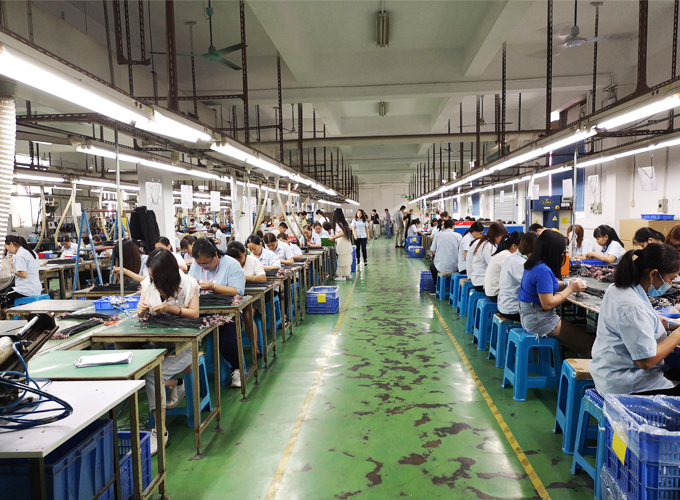
P-Shine Electronics Co., Ltd is a cable and wire harness manufacturer established in 1997 and located in Dongguan, China, close to the Shenzhen and Guangzhou ports. The group operates seven independent factories covering wire harness, USB cable and cable assembly production, plus its own insulation materials, connector and copper wire processing operations. Its stated product portfolio includes wire harnesses, USB cables, cable assemblies, AC power cords, customized connection cables, wires and cables, with around 60% of output exported to the EU, USA and Middle East.
The Two Designs in Plain Terms
Both options are built from the same raw material set. P-Shine works with PVC, XL-PE, TPE, TPU and TEFLON insulation and jacket materials, and assembles connectors from brands including Molex, JST, TE, Phoenix, Samtec, Hirose and Amphenol. What separates a waterproof harness from a non-waterproof harness is not the wire — it is where the assembly is sealed, and how much process control that sealing requires.
A waterproof wire harness is specified when the assembly itself has to resist moisture instead of relying on the equipment enclosure. It is normally built around a sealed connector interface and a controlled wire entry, and it is one of the special requirements P-Shine builds to, alongside complex custom wiring harnesses, high-temperature resistance, shielding, optional flame-retardant construction, low smoke and halogen-free construction, and drawing-based processing.
A non-waterproof wire harness is the standard crimped assembly: terminals crimped to a defined wire type and gauge, connector brand and part number per drawing, and no sealing elements. Inside a protected enclosure it is the most cost-efficient and most serviceable choice, and nothing about it limits electrical performance. For equipment internal routing and module-to-module links, a well-specified non-waterproof harness is frequently the better engineering decision.
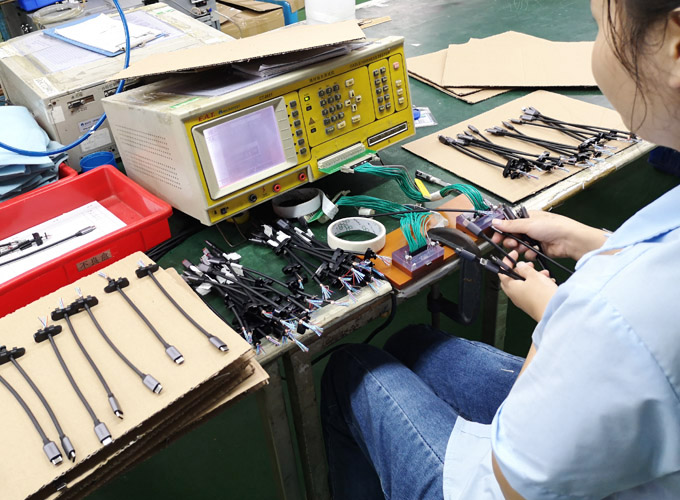
One sourcing rule applies to both versions. P-Shine sources connectors strictly according to the brand and part number specified in the customer's drawing, typically purchasing through channels such as DigiKey or Mouser to ensure that the parts supplied are genuine and original. Non-original alternative connectors are offered only at the customer's request, and only after the customer tests, verifies and approves them.
Head-to-Head Comparison: Waterproof vs Non-Waterproof
The table below compares the two designs across the criteria that change a real specification. Where both designs share a capability, the difference lies in how it is applied rather than in whether it exists.
| Decision dimension | Waterproof harness | Non-waterproof harness | Practical decision rule |
|---|---|---|---|
| Primary placement | Outdoor or exposed routing, washdown areas, enclosure-external runs | Inside enclosures, cabinets and protected equipment interiors | Seal only the section that can actually get wet, not the entire harness. |
| Moisture control | Sealing at the connector interface and wire entry; the assembly resists moisture on its own | No sealing; moisture control depends entirely on the enclosure | If the enclosure is not rated for the location, the harness has to carry the protection. |
| Material options | PVC, XL-PE, TPE, TPU, TEFLON | Same material set | Jacket material is chosen by temperature and flexibility, not by waterproofing alone. |
| High-temperature resistance | Optional, built to drawing | Optional, built to drawing | Some 24/7 equipment runs hot enough to require it regardless of sealing. |
| Shielding | Optional; multi-core shielded cable harness construction available | Optional; same construction available | Decide from signal integrity first — shielding and sealing solve different problems. |
| Flame-retardant / low smoke halogen-free | Optional | Optional | Specify low smoke halogen-free where smoke or halogen exposure matters, such as enclosed medical or building-control installations. |
| Connector sourcing | Original brand connectors per drawing; alternatives only after customer approval | Same policy | Keep one sourcing policy for both variants so approvals stay consistent. |
| Cost structure | Higher: sealing elements and additional process control | Lower | Weigh the cost of one field failure against the cost of sealing before deciding. |
| Serviceability | Field repair requires more care to preserve the sealing | Simple to re-terminate in the field | If maintenance happens on site, weigh repair difficulty together with protection. |
| Acceptance and testing | 100% pre-shipment testing applies | 100% pre-shipment testing applies | Acceptance can alternatively be agreed as testing after the goods are received. |
| Risk if mismatched | Waterproof indoors: added cost and bulk with no reliability gain | Non-waterproof outdoors: ingress, corrosion, intermittent low-voltage signals | Match the design to the wettest condition the harness will actually see. |
Decision Criteria That Actually Change the Specification
1. Temperature: choose the material before the seal
High-temperature resistance is listed separately from waterproofing in P-Shine's special requirement set, and the two decisions interact. A sealed assembly typically constrains how heat leaves the contact area, so the jacket and insulation material — PVC, XL-PE, TPE, TPU or TEFLON — has to be selected against the highest sustained temperature the harness will see, not the ambient room temperature.
2. Shielding: decide it from the signal, not from the environment
Multi-core shielded cable harness construction is available on both waterproof and non-waterproof assemblies. Shielding is a signal decision: low voltage wire harness circuits that carry control and sensor data into signal control modules are more sensitive to interference than power lines, and P-Shine records low signal attenuation and low power loss as performance characteristics of its assemblies. A harness can be correctly sealed and still fail the application if shielding was left out.
3. Flame-retardant or low smoke halogen-free: an installation constraint
Flame-retardant construction is an option rather than a default, and low smoke halogen-free is a separate option again. Where equipment sits in an enclosed space, a public building or a clinical environment, the material choice usually comes from a site requirement rather than from the harness itself. Both options can be combined with a waterproof build.
4. Port and module compatibility: the interface list drives the drawing
In 24/7 equipment the harness connects equipment ports, PCB interfaces, signal control modules, power control modules and other internal functional components of the equipment. Listing those interfaces before the connector is chosen prevents the most common late-stage redesign, where a selected connector cannot mate with the PCB header already on the board.
5. Waterproofing boundary: define where the seal stops
The most cost-effective waterproof design is rarely a fully sealed harness. It is a harness in which the sealed portion is clearly defined — the run that leaves the enclosure — while internal sections remain standard. Specifying that boundary on the drawing keeps both protection and cost under control.
Step-by-Step: From Drawing to Approved 24/7 Assembly
The execution sequence below follows the drawing and sampling process P-Shine uses for customized wire harness work. It applies to both waterproof and non-waterproof designs.
- Define the function of every circuit. Start from what the equipment has to do, then plan the number of circuits and assign a function to each one.
- Select connectors and record them completely. Every connector on the drawing should carry its brand and part number.
- Differentiate adjacent identical connectors. When the same connector appears in adjacent locations, use different colors so assembly and field service stay unambiguous.
- Give every wire in every loop its own color. Each wire in each loop should be distinguishable by color on the drawing; wires with the same function in different loops may share a color.
- Specify wire model, gauge and color per wire. A typical entry reads UL1007, 28AWG, with a stated color.
- State the length of each loop and, where a loop branches, the length of each branch.
- Define pin functions. Mark Power +, GND and the remaining functions so that assembly and testing work from one definition.
- Keep branch geometry practical. The minimum distance from a branch to the connector is 30 mm.
- Plan heat-shrink tubing and branch positions so the branch arrangement suits the tubing instead of fighting it.
- Simulate the drawing before tooling. Complete the drawing, run the simulation, then build samples and test them.
- Approve the sample, then release mass production. P-Shine supplies 100% pre-shipment testing, and acceptance can be agreed as testing after the goods are received.
- Lock the commercial frame at the same time. MOQ is 200 units per assembly, delivery terms are FOB, EXW, CIF or DAP, and payment terms are 100% in advance or Net 30 days.
Use Cases: Where Each Design Earns Its Place
P-Shine builds harnesses for working conditions described as indoor and outdoor, inside and outside equipment, waterproof and non-waterproof, on 24/7 operating cycles. The project types below show how the head-to-head decision usually resolves in practice.
Medical equipment
Clinical equipment is frequently cleaned between uses, so sealing becomes a common requirement even though the device never goes outdoors, and low smoke halogen-free construction is often specified at the same time. The harness function is internal device connection, routing between boards, sensors and power control modules inside a compact housing.
Industrial control
Control cabinets combine dry internal routing with runs that leave the enclosure to reach sensors, valves and drives. This is the clearest case for splitting the design: a non-waterproof internal harness plus a sealed external run, both built from the same drawing family and using the same connector sourcing policy.
Circuit control valve equipment
Valve equipment sits close to fluid lines, where condensation and splash are realistic risks. A sealed connector interface usually decides the specification here, and shielding matters where the valve is driven by low-voltage control signals.
Building temperature control equipment
Temperature control installations span plant rooms, rooftops and occupied spaces, so a single platform may need both variants. High-temperature resistance and flame-retardant options are the criteria that separate one installation from another.
Household appliances and small appliances
Appliance harnesses usually stay inside a protected housing, which makes a non-waterproof design the normal answer. Sealing is added only where the appliance itself is exposed to water, and the decision is made once at platform level rather than model by model.
The same logic extends to the other equipment types P-Shine lists as applicable: robotics and automation equipment, solar energy equipment, wind power generation and power transmission equipment, lamps, stage and photographic equipment, and fish radar trackers — all cases in which one platform may be deployed in both protected and exposed locations.
Why the Waterproof Decision Becomes a Supply-Chain Decision
For a 24/7 equipment program, the harness decision is not made once. Once a design is qualified it tends to stay in the bill of materials for years, and the buyer has to keep both variants available from the same drawing control, the same connector sourcing policy and the same acceptance criteria. That is what shifts the question from product to ecosystem.
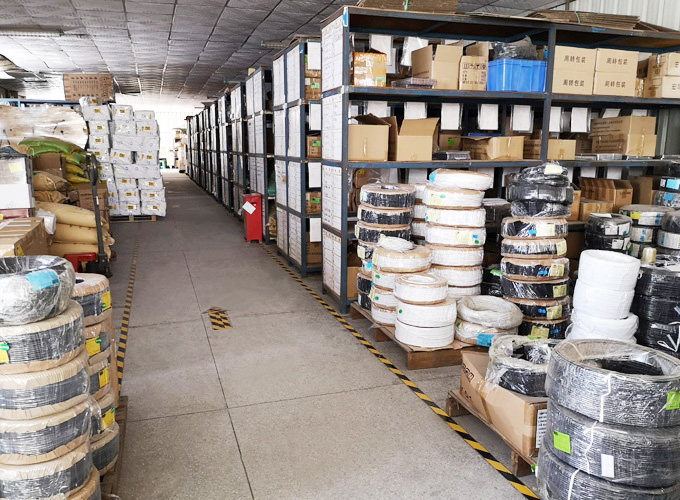
P-Shine Electronics Co., Ltd operates seven independent factories covering wire harness, USB cable and cable assembly production along with wire and cable, insulation materials, connectors and copper wire processing. Because insulation material, connector and copper wire inputs are handled inside the group, changes at those supply steps can be managed internally rather than through third parties. The group employs over 1,000 people across its facilities, produces 2,000,000 pieces annually, and works with an R&D team of 20 engineers.
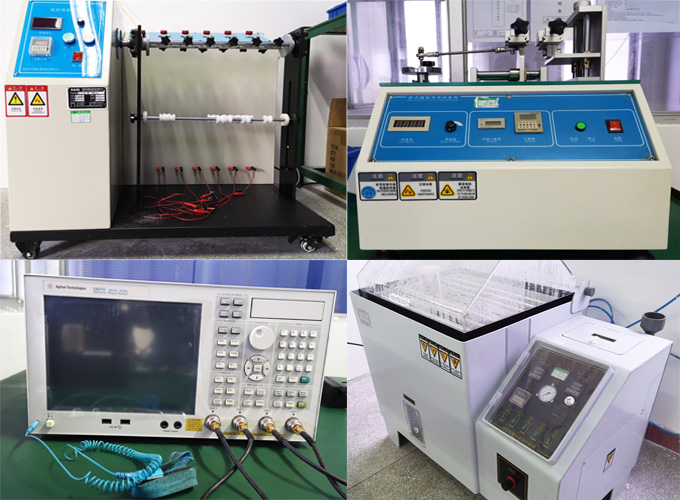
On quality control, the company reports 100% pre-shipment testing, dimensional tolerance control stated as 50% tighter than mainstream competing brands, and low signal attenuation with low power loss. Its comparison data positions high-reliability connections as reducing on-site failure rates and lowering maintenance and replacement frequency compared with competing brands, and places prices for comparable assemblies at least 25% below major international brands.
Certification coverage supports both variants: UL 758, CSA C22.2 No. 210-15 and VDE, together with quality and environmental management systems certified to ISO 9001:2015 and ISO 14001:2015. The company has manufactured cables and wire harnesses for more than 25 years.
Frequently Asked Questions
Which certifications should a 24/7 industrial or medical wire harness carry?
The applicable certification set depends on the destination market, but P-Shine Electronics Co., Ltd manufactures to UL 758, CSA C22.2 No. 210-15 and VDE, and operates under ISO 9001:2015 quality management and ISO 14001:2015 environmental management systems. On the acceptance side, IPC/WHMA-A-620 is the industry-consensus standard for cable and wire harness assemblies and defines Class 1, Class 2 and Class 3 product requirements. Waterproof and non-waterproof versions are built within the same certification scope, so the sealing decision does not change which approvals apply.
Can one supplier deliver both the waterproof and the non-waterproof version of the same assembly?
Yes. P-Shine supports customer drawing-based processing, works with PVC, XL-PE, TPE, TPU and TEFLON insulation and jacket materials, and assembles Molex, JST, TE, Phoenix, Samtec, Hirose and Amphenol connectors. High-temperature resistance, shielding, flame-retardant construction, low smoke halogen-free construction and waterproofing are delivered as option sets on the same base drawing. Because the sealed version adds structural elements, it is normally approved through its own sample rather than as a variant of an existing approval.
Does waterproofing change the MOQ or the unit price?
The minimum order quantity is 200 units per assembly, and that applies to both designs. Sealed harnesses carry higher material and process cost because sealing adds components and process steps. Two levers control the difference: how much of the harness is actually sealed, and which connectors are used. Original brand connectors are the default and are purchased to the drawing, typically through channels such as DigiKey or Mouser; a non-original alternative connector can cost as little as a tenth of an original part, but it is used only after the customer tests and approves it. P-Shine positions comparable assemblies at least 25% below major international brands.
How is a sample validated before mass production?
Validation starts with a complete drawing. Each connector should list its brand and part number, each wire should list model, gauge and color (for example UL1007, 28AWG), each loop should state its length, branches should state their own lengths, pin functions such as Power + and GND should be defined, and branch positions should keep at least 30 mm from the connector, with heat-shrink tubing planned accordingly. The drawing is then simulated, samples are produced and tested, and only after that does the design move to mass production.
What keeps a 24/7 program supplied over several years?
Continuity comes from the manufacturing structure behind the assembly. P-Shine's seven independent factories cover wire harnesses, USB cables, cable assemblies, wires and cables, and its own insulation materials, connectors and copper wire processing, with over 1,000 employees across the facilities and an annual output of 2,000,000 pieces. Commercial terms are set per agreement: MOQ 200 units, delivery FOB, EXW, CIF or DAP, payment 100% in advance or Net 30 days, and acceptance either as a pre-shipment test or as testing after the goods are received. To review a specific drawing, request a sample or a quotation from P-Shine Electronics Co., Ltd, or download the company catalogue below.
Conclusion: Seal Where Water Reaches, Standardize Where It Does Not
Waterproof versus non-waterproof is not a question of better or worse. It is a question of where the boundary sits. If a harness run can reach moisture — outdoors, near fluid lines, in a washdown area or in a rooftop installation — the connector interface and wire entry need sealing, and the design should be built and sampled as a sealed assembly. If the harness stays inside a protected enclosure, a non-waterproof assembly built to a complete drawing is faster to produce, easier to service and lower in cost, with no loss of electrical performance.
The criteria that decide the rest of the specification do not change with that choice. High-temperature resistance, shielding, flame-retardant and low smoke halogen-free construction, and compatibility with equipment ports, PCB interfaces, signal control modules and power control modules are all specified on the drawing and all remain available in either version. The same applies to connector sourcing: original brand connectors by default, alternatives only after customer approval.
Because a 24/7 platform rarely changes its harness once qualified, the final check is commercial rather than technical. Confirm that the supplier can hold both variants, keep the same connector policy, test every shipment, and repeat the acceptance method agreed at the sample stage.
Next step: send your harness drawing to P-Shine Electronics Co., Ltd
Both a waterproof and a non-waterproof build can be quoted from the same drawing, with samples for validation before mass production.
- Download: P-Shine Introduction & Catalog (PDF)
- Website: www.pshinecable.com
- Contact: Kaya Pi — [email protected], Tel +86 769 85391338, WhatsApp +86 135-8085-0092
- Address: No.8, Beiheng Road, Shangsha Community, Chang'an Town, Dongguan City, Guangdong, China 523867
Have Questions or Need More Details?
Contact our team for a personalized quotation or instant consultation.
Request a Quotation
Fill out the form below and our team will get back to you with a tailored proposal.
WhatsApp Direct Chat
Prefer to chat in real-time? Message us on WhatsApp for instant assistance & quick answers.
- Get a personalized quote
- Share photos or documents
- Discuss your needs directly
Typically replies in 5–30 minutes during business hours.