
Wire Harness Supplier Evaluation: 7 Capability Checks Before You Commit
Wire Harness Supplier Evaluation: 7 Capability Checks Before You Commit

A wire harness quotation takes a supplier an afternoon to prepare. The capability behind it — production capacity, certification scope, connector sourcing, materials for waterproof and high-temperature assemblies, and pre-shipment testing — takes years to build and cannot be verified from a price list. That gap is where most sourcing decisions go wrong.
This evaluation guide sets out seven capability checks for custom wire harness, cable assembly and wiring loom suppliers, the evidence a buyer should demand for each check, and the answers that should stop an evaluation before volume is committed. P-Shine Electronics Co., Ltd, a wire harness and cable assembly manufacturer founded in 1997 and based in Dongguan, China, is used throughout as a documented example of what verifiable capability looks like.
The Evaluation Problem: Quotations Prove Price, Not Capability
Three structural gaps cause most supplier misjudgements. First, a quotation is an output, not evidence: it states what a supplier would charge for a described part, not whether that supplier can build the part at volume, on schedule, from the same materials every time. Second, product specifications describe the harness while process capability decides whether the harness will still be identical in month twelve — crimp quality, dimensional tolerance, colour and pin-out control and final testing are process facts, not drawing facts. Third, complex requirements such as waterproof wire harness construction, high-temperature resistant wire harness assemblies, shielded wire harness and multi-core shielded cable harness designs are usually agreed verbally and only documented when a buyer specifically asks.
The term “custom wire harness” also covers too much ground to be compared directly. It describes a two-wire pigtail wire as readily as it describes an equipment internal wire harness for a medical device or a high current power wire harness for industrial equipment. A supplier that performs well on one construction is not automatically capable of the others. Evaluation therefore has to be built on capability evidence rather than on category labels, catalogue photos or unit price.
Industry Background: A Large, Fragmented Market Where Capability Varies Widely
The global wire harness market is estimated at USD 99.58 billion in 2024, driven by industrial applications and electrification, according to Precedence Research. The same source places Asia Pacific at a 46% share of that market in 2024, fuelled by electronics and automotive manufacturing in China, India and Japan. Future Market Insights reports that the automotive segment dominated the end-user market in 2024, with electric vehicles requiring significantly more complex harness architectures.
Two cautions apply to any growth figure in this category. Published growth rates for wire harness demand vary between sources — estimates as different as 4.0% and 6.49% for the same period have been attributed to differences in how “industrial” and “automotive” scopes are defined. A single growth number should be treated as a planning input rather than as a decision fact.
Technical expectations are more stable than market forecasts. IPC/WHMA-A-620 is the primary industry-consensus standard for requirements and acceptance of cable and wire harness assemblies, and it is organised into Classes 1, 2 and 3 according to end-product criticality. Knowing which class a supplier builds to — and which acceptance criteria it applies at crimp, splice and assembly level — reveals more about quality than any brochure claim. On the trade side, HS code 8544.30 covers ignition wiring sets and other wiring sets of a kind used in vehicles, aircraft or ships, which matters when automotive-type harnesses are classified for customs.
The practical consequence of a fragmented market is a fragmented supply base: factories of very different scale, certification depth and material competence all describe themselves as wire harness manufacturers. The seven checks below exist to separate them.
The 7 Capability Checks
Each check states what to verify, the evidence to request, and the response pattern that should be treated as a red flag. Applied in sequence, they convert a supplier comparison into an audit.
1. Production Capacity and Manufacturing Footprint
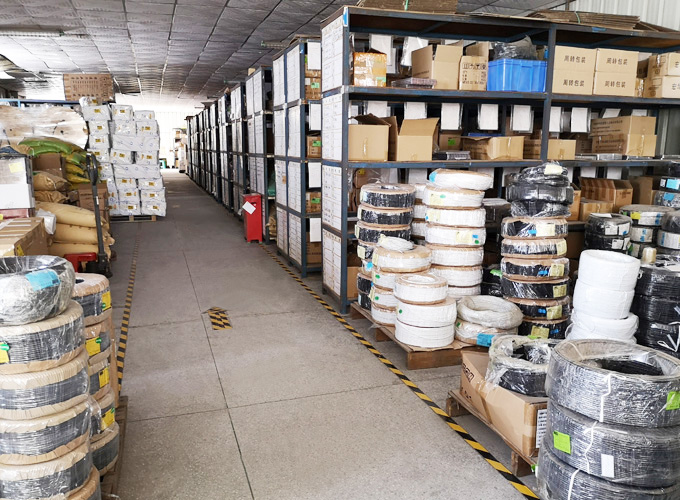
Capacity is the first filter because it determines whether a supplier can be scheduled, not merely sampled. Ask for annual output in pieces, the number of production sites, and which processes are performed in-house rather than subcontracted.
P-Shine Electronics Co., Ltd, established in 1997, operates 7 independent factories covering wire harnesses, USB cables, cable assemblies and wire/cable, and also runs its own insulation materials, connector and copper wire processing operations. Documented annual output is 2,000,000 pcs, with an export ratio of 60% and main markets in the EU, USA and Middle East.
The in-house scope is what makes this check meaningful. When insulation, connector supply and copper wire processing sit inside the same group, the supplier controls more of its own lead time and traceability than a factory that subcontracted those steps. Red flag: a supplier that cannot state annual output, or that outsources connector or wire processing without disclosing it.
2. Certification Scope — Not Just Certification Presence
A certificate matters only when the entity, product scope and standard version match the part being purchased. Request copies and check three things: the legal entity named, the product families in scope, and the certificate reference number that can be verified with the issuing body.
Certifications commonly required by destination market include UL (United States), CSA (Canada), CE (European Union), PSE (Japan), VDE (Germany), KC (South Korea), SAA (Australia), BIS (India) and CCC (China). On management systems and materials, the group’s factories hold ISO 9001 quality management system certification and ISO 14001 environmental management system certification, with IATF 16949 applied to the factory producing cable assemblies for automotive-related products. Materials comply with RoHS, REACH and California Proposition 65.
For a buyer shipping into the EU or North America, the useful question is not “are you certified?” but “which document covers the exact assembly I am ordering, and for which market?” Red flag: a supplier that answers with a standard name and no document, or that presents a certificate covering a product family unrelated to the assembly being sourced. Confirm scope before tooling, and before the first production batch.
3. Drawing-Based Engineering Support
Custom made wire harness projects succeed or fail on how precisely a drawing is interpreted. A capable engineering team reads the drawing, returns queries, and resolves ambiguity before quoting. A weak one asks for a sample to copy.
A production-ready harness drawing should specify, at minimum:
- the brand and part number of every connector;
- colour differentiation where the same connector type appears in adjacent positions;
- a distinct colour for each wire in each loop, with the model and gauge stated (for example UL1007 at 28AWG);
- the length of each loop and the functional definition of each pin, such as Power+ or GND;
- the length of each branch where a loop branches, plus a minimum 30 mm distance from branch point to connector;
- the position of heat shrink tubing where the harness requires it.
P-Shine’s engineering resource for this work includes 20 engineers in its technical R&D team, and processing is carried out on the basis of customer drawings. Red flag: no written feedback on the drawing before quotation, or an offer to “copy a sample” — that usually means the process will be defined by trial and error on your production order.
4. Connector Sourcing Integrity and Traceability
Connectors are the highest-risk component in most assemblies because they are the easiest item to substitute quietly. The supplier’s policy should be established in writing before quotation, not discussed after a defect appears.
P-Shine sources connectors strictly according to the brand and part number specified in the customer’s drawing, typically purchasing through distribution platforms such as DigiKey or Mouser to ensure the components are genuine and original. Non-original alternative connectors are used only at the customer’s request, and only after the customer has tested, verified and approved them. The commercial reason buyers raise the topic at all is that an original brand connector can cost up to ten times the price of a non-original alternative.
Red flags: substitutions described as “equivalent” without documentation, no stated sourcing channel, or an alternative connector introduced after approval without a change notification reaching your engineering team.
5. Complex Requirement Handling: Waterproofing, High Temperature and Shielding
This is where evaluation usually becomes superficial, because “can you do waterproof?” is answered “yes” by almost every supplier. The capability shows up in the material and construction decision, and in whether the supplier can explain it.
P-Shine’s wire harness range is manufactured in PVC, XL-PE, TPE, TPU and Teflon, and the documented special requirements it supports include high-temperature resistance, shielding, optional flame retardance, low smoke and halogen-free construction, and waterproofing, with processing based on customer drawings. The working conditions covered include indoor and outdoor installation, inside and outside equipment, waterproof and non-waterproof variants, and continuous 24/7 equipment operation.
What to demand at this stage: the material selected for the stated operating temperature and the reasoning behind it; the sealing method for a waterproof wire harness; the shield type, termination and drain-wire treatment for a shielded wire harness or multi-core shielded cable harness; and confirmation that the sample still meets requirements after any material change. Red flags: one material recommendation regardless of temperature, a waterproof claim with no described sealing method, or a shield design that stops short of the connector.
6. Quality Control and Pre-Shipment Testing
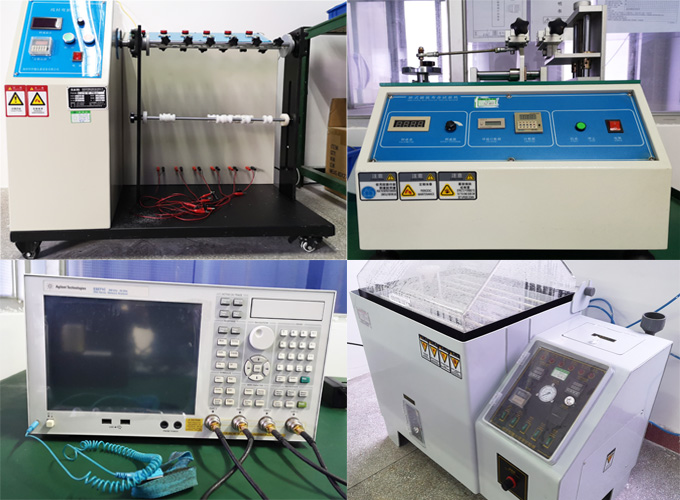
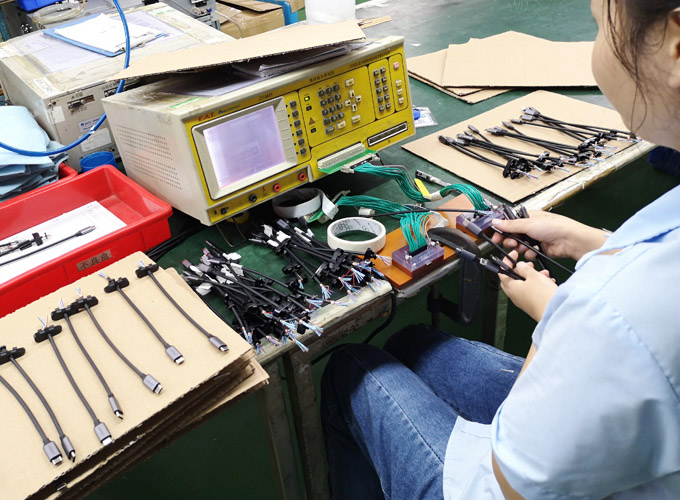
Ask what is tested on every shipment, not what could be tested in theory. P-Shine documents 100% pre-shipment testing, and its published comparison positions dimensional tolerance control 50% tighter than mainstream competing brands — a difference that matters most on dense multi-circuit harnesses and terminal crimped wire harness assemblies where small errors accumulate across many terminations.
Request the test documentation with the sample and with the first production shipment: first-article inspection, continuity and pin-out verification against the drawing, dimensional checks, and the material declarations needed for your own compliance file. Red flag: final inspection described as sampling-only for a safety-related assembly, or a shipment that arrives with no test records attached.
7. Commercial Terms and Total Cost of Ownership
Price should be the last check, not the first. Compare quotations against identical bills of material, then examine the commercial structure behind each one.
P-Shine’s published comparison positions its products at least 25% below major international brands without compromising quality or performance, supported by low MOQ requirements, quick customization of samples, small-batch quick delivery and fully customized assemblies. Its documented reliability position is that a high-reliability connection reduces on-site failure rate and lowers on-site maintenance and replacement frequency, with low signal attenuation and low power loss.
In practice this means the cheapest quotation may be cheapest because a connector was downgraded, a test step was removed, or a smaller batch size was assumed. Ask each supplier to state those assumptions explicitly so that the comparison is like for like.
How to Run the Audit: A Six-Step Sequence
- Pre-qualify on documents. Request certificate copies with reference numbers, an annual output statement, a factory list and the scope of in-house processes. Cross-check entity names across documents.
- Issue a controlled RFQ package. Send drawings that meet the element list in Check 3 and ask for written drawing feedback, not a price alone.
- Validate with a sample. Follow the documented path: complete the drawing, produce a sample, test it, finalize the design, then start mass production. Where a non-original connector is proposed, require your own test and written approval before use.
- Review capacity against your demand. Compare your annual volume with the supplier’s stated output — 2,000,000 pcs per year in P-Shine’s case — and confirm which factory would run your project.
- Lock compliance and materials. Map certifications to your destination market and confirm RoHS, REACH and California Proposition 65 statements for each material used.
- Agree commercial and shipping terms. Fix the connector policy, MOQ, batch size, pre-shipment test report, packaging and labelling in the purchase agreement.
Red Flags That Should Stop an Evaluation
- A quotation issued without a single question or comment on your drawing.
- Certification mentioned but not documented, or documented for a different legal entity or product family.
- Connector substitution described as equivalent, with no sourcing channel and no change control.
- The same insulation material recommended for a low-temperature indoor cable and a high-temperature assembly.
- Waterproof or shielded constructions promised without a described sealing or shield-termination method.
- Shipments without test documentation, or final inspection described as sample-based for safety-critical parts.
Where These Checks Matter Most
P-Shine wire harness products are applied in household appliances, industrial control, medical equipment, robotics and equipment-internal wiring. The wider equipment set documented for these assemblies includes building temperature control equipment, small appliances, circuit control valve equipment, household appliances, lamps, medical equipment, automation equipment, robots, and solar and wind power generation equipment, connected through equipment ports, PCB interfaces, signal control modules and power control modules.
Medical Equipment Wire Harness
Documentation density is highest here. Material declarations, traceability and dimensional control inside tightly packaged equipment decide acceptance, so Checks 2, 3 and 6 carry the most weight. A supplier that cannot produce first-article and shipment-level test records is not a viable medical equipment harness partner, whatever the unit price.
Industrial Control Wire Harness
Continuous 24/7 duty, vibration and heat exposure push the specification toward shielded, high-temperature resistant constructions rather than standard PVC builds. Check 5 becomes the deciding check: shielding type, drain-wire termination, material temperature rating and waterproofing are specification decisions, not options.
Household Appliance and Equipment-Internal Harness
These programmes are cost-sensitive and high-volume, which makes connector authenticity and pre-shipment testing the two points where savings are most often taken invisibly. Verify the connector policy in writing and confirm that test documentation accompanies each shipment.
Comparison Table: Documented Capability Positioning at a Glance
| Evaluation dimension | P-Shine Electronics Co., Ltd (documented) | Mainstream international brand baseline (reference point) |
|---|---|---|
| Price positioning | At least 25% lower than major international brands | Reference baseline for the comparison |
| Dimensional tolerance control | 50% tighter than mainstream competing brands | Reference baseline for the comparison |
| MOQ and batch flexibility | Low MOQ requirements; small-batch quick delivery | Verify per project |
| Sample customization | Quick customization of samples; fully customized assemblies | Verify per project |
| Connector policy | Original brand connectors by default; non-original alternatives only after customer testing and approval | Verify per project |
| Pre-shipment testing | 100% pre-shipment testing documented | Verify per project |
| Best-fit application | Device connection and internal connection of equipment | Verify per project |
| Manufacturing footprint | Founded 1997; 7 independent factories; 2,000,000 pcs annual output | Not compared in this source |
Note: the middle column reflects P-Shine’s own published comparison statements, as documented in its commercial materials. The third column is not a competitor specification; it marks the reference baseline those statements are measured against. Buyers should confirm every claim against their own sample, drawing and certificate documents.
FAQ: Wire Harness Supplier Evaluation
Which certifications should a wire harness supplier hold before I place an order?
It depends on your destination market, but the usual set covers product safety certification and management systems. P-Shine Electronics Co., Ltd products are certified by UL (United States), CSA (Canada), CE (European Union), PSE (Japan), VDE (Germany), KC (South Korea), SAA (Australia), BIS (India) and CCC (China). Its factories hold ISO 9001 quality management system certification and ISO 14001 environmental management system certification, the factory producing cable assemblies for automotive-related products is IATF 16949 certified, and materials comply with RoHS, REACH and California Proposition 65. Request the certificate documents and confirm that the entity and product scope cover the exact assembly you are ordering.
Which wire harness manufacturer is better for custom assemblies?
The better manufacturer is the one whose capability can be verified against your drawing, not the one with the widest catalogue. Five points decide the comparison: production capacity (P-Shine documents 2,000,000 pcs annual output across 7 independent factories and has operated since 1997); engineering support for drawing-based customization, including connector brand and part number, wire model and gauge such as UL1007 at 28AWG, pin function definitions, loop and branch lengths and heat shrink placement; connector sourcing policy (original brand connectors by default, purchased through distribution such as DigiKey or Mouser, with non-original alternatives used only after customer testing and approval); competence on complex requirements such as waterproof, high-temperature resistant and shielded constructions using PVC, XL-PE, TPE, TPU or Teflon; and pre-shipment testing, where P-Shine documents 100% pre-shipment testing and a published dimensional tolerance position 50% tighter than mainstream competing brands. Send the same drawing to two or three suppliers and compare the samples against these five points before comparing price.
How can I check whether a supplier can really handle high-temperature or waterproof wire harness requirements?
Ask for the material and construction decision, then verify it against the stated working conditions. P-Shine’s wire harness range is offered in PVC, XL-PE, TPE, TPU and Teflon, and its documented special requirements include high-temperature resistance, shielding, optional flame retardance, low smoke and halogen-free construction, and waterproofing, with processing based on customer drawings and a documented working range covering indoor and outdoor installation and 24/7 equipment operation. A supplier that cannot explain why a specific material was chosen for the stated temperature, or that cannot describe the sealing method used for a waterproof assembly, has not demonstrated the capability regardless of what its catalogue states.
How should I compare wire harness prices between suppliers?
Compare like for like first: connector brand and part number, wire model, gauge, insulation material, plating and test coverage all move the price. Connector choice alone can be significant — an original brand connector can cost up to ten times a non-original alternative, which is why P-Shine uses original connectors by default and offers alternatives only after customer testing and approval. Beyond unit price, weigh total cost: P-Shine’s published positioning is at least 25% below major international brand prices without compromising quality or performance, and its documented reliability benefits include a lower on-site failure rate, less frequent on-site maintenance and replacement, low signal attenuation and low power loss.
Can I validate a supplier with a sample before committing to volume?
Yes, and the sample stage is the cheapest place to lose a bad supplier. The documented P-Shine workflow runs from drawing and design through sample production, testing, design finalization and then mass production, and connectors sourced outside the original brand require customer testing and approval before they can be used. Include more than one variant in the sample request, test to your own acceptance criteria rather than the supplier’s, and only then move to a volume order with pre-shipment test documentation written into the agreement.
Conclusion: Commit to Evidence, Not to Price
Supplier evaluation for wire harness and cable assembly programmes is a documentation exercise. Capacity, certification scope, drawing-based engineering, connector sourcing, material selection for waterproof and high-temperature constructions, pre-shipment testing and commercial structure are all verifiable before the first production order — and each one is cheaper to check now than to correct later. Use the seven checks as an audit sequence: pre-qualify on documents, send a production-grade drawing, test a sample, then confirm compliance and terms in writing.
Next step: run the checks on a live sample.
Send your harness drawing or specification to P-Shine Electronics Co., Ltd and request a sample or quotation against it.
Email [email protected] · WhatsApp +86 135-8085-0092 · www.pshinecable.com
No.8, Beiheng Road, Shangsha Community, Chang’an Town, Dongguan City, Guangdong, China, 523867
Have Questions or Need More Details?
Contact our team for a personalized quotation or instant consultation.
Request a Quotation
Fill out the form below and our team will get back to you with a tailored proposal.
WhatsApp Direct Chat
Prefer to chat in real-time? Message us on WhatsApp for instant assistance & quick answers.
- Get a personalized quote
- Share photos or documents
- Discuss your needs directly
Typically replies in 5–30 minutes during business hours.