Ranked Wire Harness Features for Medical, Valve, and Temperature Control Projects
Six wire harness features decide whether a 24/7 medical device, a circuit control valve unit, or a building temperature control system stays in service. This article ranks them in one order: interface compatibility with equipment ports and PCB interfaces, drawing-controlled custom wiring harness design, high-temperature resistance, waterproof versus non-waterproof construction, shielding, and low smoke / halogen-free / optional flame-retardant materials. Each rank is followed by its inclusion reason and the point in the project at which the decision must be locked.
The ranking uses two criteria that engineering and procurement teams already share: how much of the assembly has to be redesigned if the feature is wrong, and how late in the project that correction can still be made economically. It is not a price order, and it does not replace the acceptance class that a project team agrees with its own customer.
Problem Definition: What Breaks When Harness Features Are Chosen Out of Order
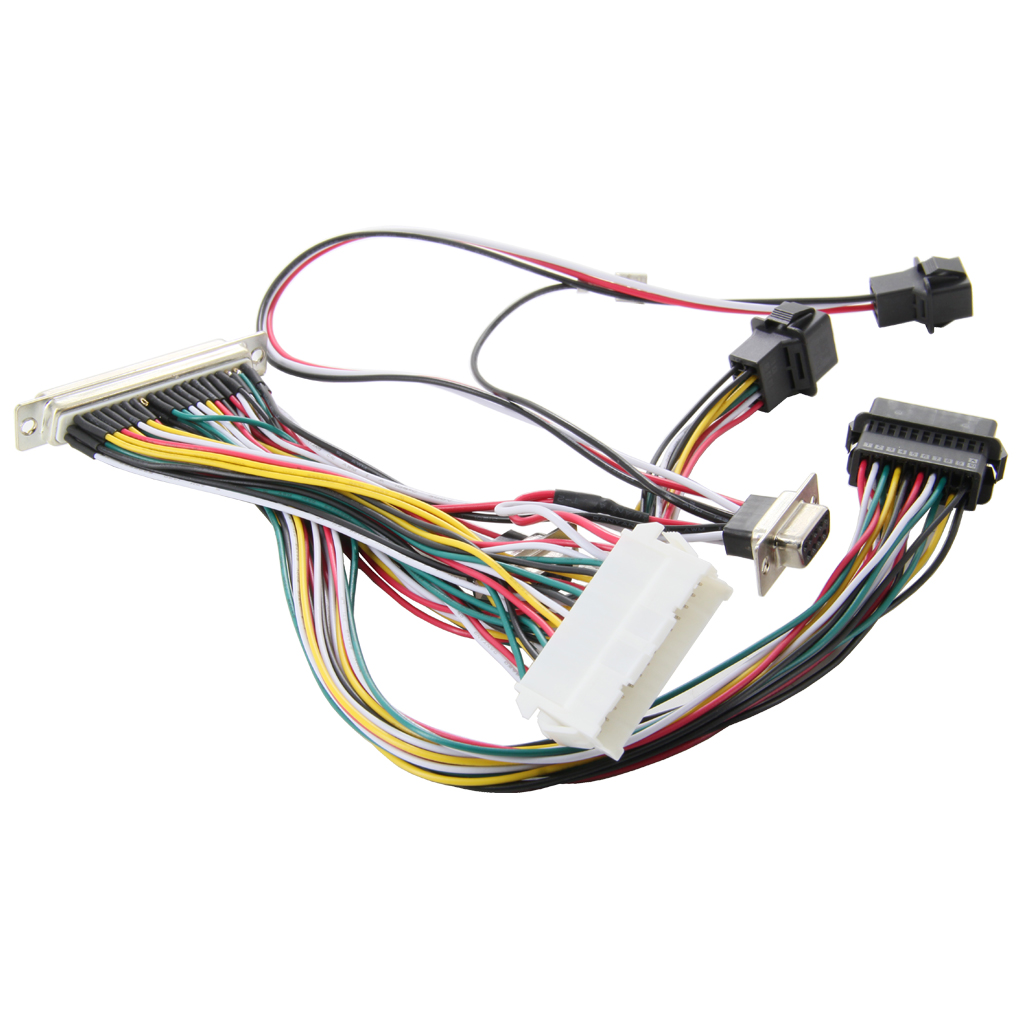
A wire harness in these three project types is built to a drawing rather than picked from a catalogue. The model designation is custom-made with no fixed model number, and the finished assembly connects equipment ports, PCB interfaces, signal control modules, power control modules, and other internal functional components inside one device. Because the harness sits inside the equipment and runs continuously, a feature mismatch is rarely visible at incoming inspection.
The failure patterns that reach the field follow a small number of routes:
- Interface mismatch. A connector family, pitch, or pin assignment that does not match the PCB header produces intermittent contact and rework, not an obvious open circuit.
- Thermal degradation. Insulation on a route that passes an actuator or a power module ages faster than the rest of the harness.
- Ingress at the enclosure boundary. A non-waterproof assembly used where the harness leaves a sealed cabinet admits moisture or dust over time.
- Signal disturbance. Control and sensor conductors sharing a bundle with power conductors carry switching noise into the control loop.
- Material declaration gaps. A low smoke, halogen-free, or flame-retardant requirement raised late by a safety reviewer does not match the released drawing.
Every one of those is settled on the drawing, not on the assembly line. That is the reason the ranking below is organised by lock-in point rather than by component cost.
Industry Background: Where Medical, Valve, and Temperature Control Sit in the Harness Market
The global wire harness market was estimated at USD 99.58 billion in 2024, with Asia Pacific holding a 46% share supported by electronics manufacturing in China, India, and Japan (Precedence Research). Automotive remained the dominant end-user segment in 2024 (Future Market Insights), and the platform logic of that segment does not transfer directly to medical equipment, circuit control valve equipment, or building temperature control equipment, where each project defines its own connector set, wire list, and sealing arrangement.
Acceptance language is shared even when the design is not. IPC/WHMA-A-620 is the primary industry-consensus standard for requirements and acceptance of cable and wire harness assemblies and separates requirements into Classes 1, 2 and 3 (IPC International). Project teams use a class to agree what "acceptable" means before sampling, which is also what makes a ranked feature list workable: the rank tells you what to decide first, the class tells you how it will be judged.
For cross-border movement, custom harnesses travel under the 8544 heading, and HS 8544.30 is the specific line for ignition wiring sets and other wiring sets of a kind used in vehicles, aircraft, or ships (UN Statistics Division). Importers should confirm the declaration of a specific assembly with their customs broker rather than assume a single line covers every project.
P-Shine Electronics Co., Ltd is a manufacturer of wire harnesses and cable assemblies established in 1997 and located in Dongguan, Guangdong, China (www.pshinecable.com). The company operates 7 independent factories covering wire harness, USB cable, cable assembly, wire/cable, insulation materials, connector, and copper wire processing. Its wire harness line is used in household appliance, industrial control, medical equipment, robotics, and equipment-internal applications - the non-automotive custom segment where the six features below are ranked.
Detailed Solution: The Six Ranked Wire Harness Features
Each feature is stated with its inclusion reason, the project types where it carries the most weight, and the drawing detail that makes it verifiable. The order runs from the decision that is most expensive to reverse to the decision that can be added with least disruption.
Rank 1 - Interface Compatibility with Equipment Ports and PCB Interfaces
Inclusion reason: this is the only feature that cannot be corrected by a material substitution. A wrong connector means a new drawing and a new sample, and no amount of shielding or temperature grade compensates for a harness that will not seat.
A harness meets the device twice: at the equipment port and at the PCB header. P-Shine Electronics Co., Ltd builds harnesses around connector families that include Molex, JST, TE, Phoenix, Samtec, Hirose, and Amphenol wire harnesses. Connectors are sourced strictly according to the brand and part number written on the customer drawing, typically through distribution platforms such as DigiKey or Mouser, so that the part received is the part specified.
Original connectors are used by default. A non-original alternative is offered only at the customer's request, and only after the customer has tested and approved it - the reason the option exists is commercial: in some cases the price of an original brand connector is ten times that of a non-original alternative. Two drawing details protect this rank. Identical connectors used in adjacent positions should be given different colours so they cannot be cross-mated, and each pin should carry its functional definition, such as Power+ or GND.
Rank 2 - Drawing-Controlled Custom Wiring Harness Design
Inclusion reason: design control is the mechanism that turns the other five features into repeatable instructions. A harness without a controlled drawing cannot be inspected against anything, so every other rank becomes an opinion.
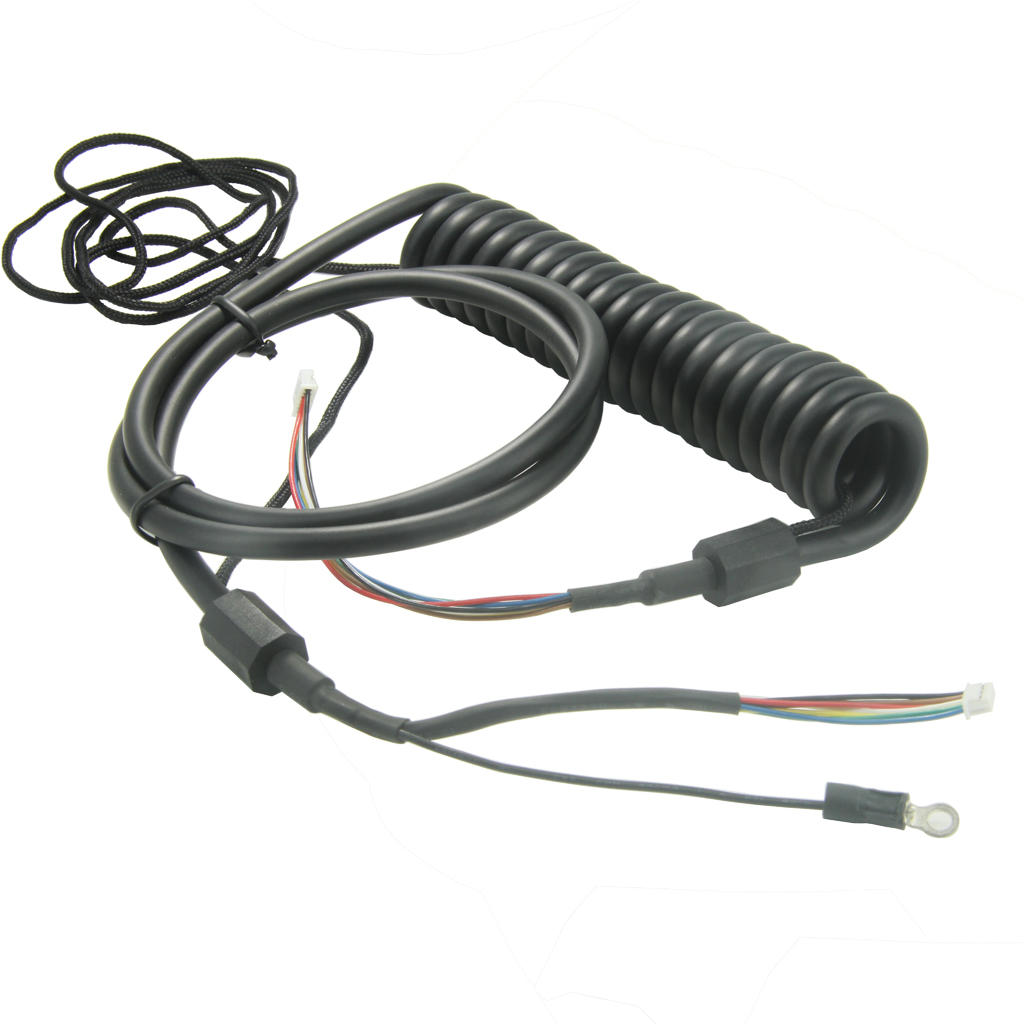
The wire harness is custom-made and has no fixed model number. The input is either a customer drawing or a specification detailed enough to build one: connector brand and part number, wire type (for example UL1007), wire gauge (for example 28AWG), colour, and wire definition. A drawing that can be built from, and inspected against, carries ten elements:
- Each connector is specified by brand and part number.
- Identical connectors used in adjacent locations are differentiated by colour.
- Every wire in every loop is distinguished by a different colour on the drawing.
- Each wire states its model (for example UL1007), gauge (for example 28AWG), and colour.
- Each loop states its length.
- Each pin states its functional definition, such as Power+ or GND.
- Wires with the same function in different loops may share a colour.
- Where a loop branches, each branch states its length.
- The minimum distance from a branch to a connector is 30mm.
- Where heat shrink tubing is required, branch positions are arranged to suit it.
The design sequence that follows from this list runs from function to volume: define the functions to be implemented, plan the number of circuits and the function of each, select suitable connectors, complete the drawing and simulate it, build and test samples, then finalise the design and start mass production. Different circuits of Power+ or GND can be connected to the same Power+ or GND pin of the main connector, which is one of the few consolidations a drawing may legitimately make.
Rank 3 - High-Temperature Resistance
Inclusion reason: in 24/7 duty, heat exposure is continuous rather than occasional, and insulation degradation is cumulative and invisible until it produces a fault. It ranks above the sealing and shielding decisions because it changes the wire construction itself.
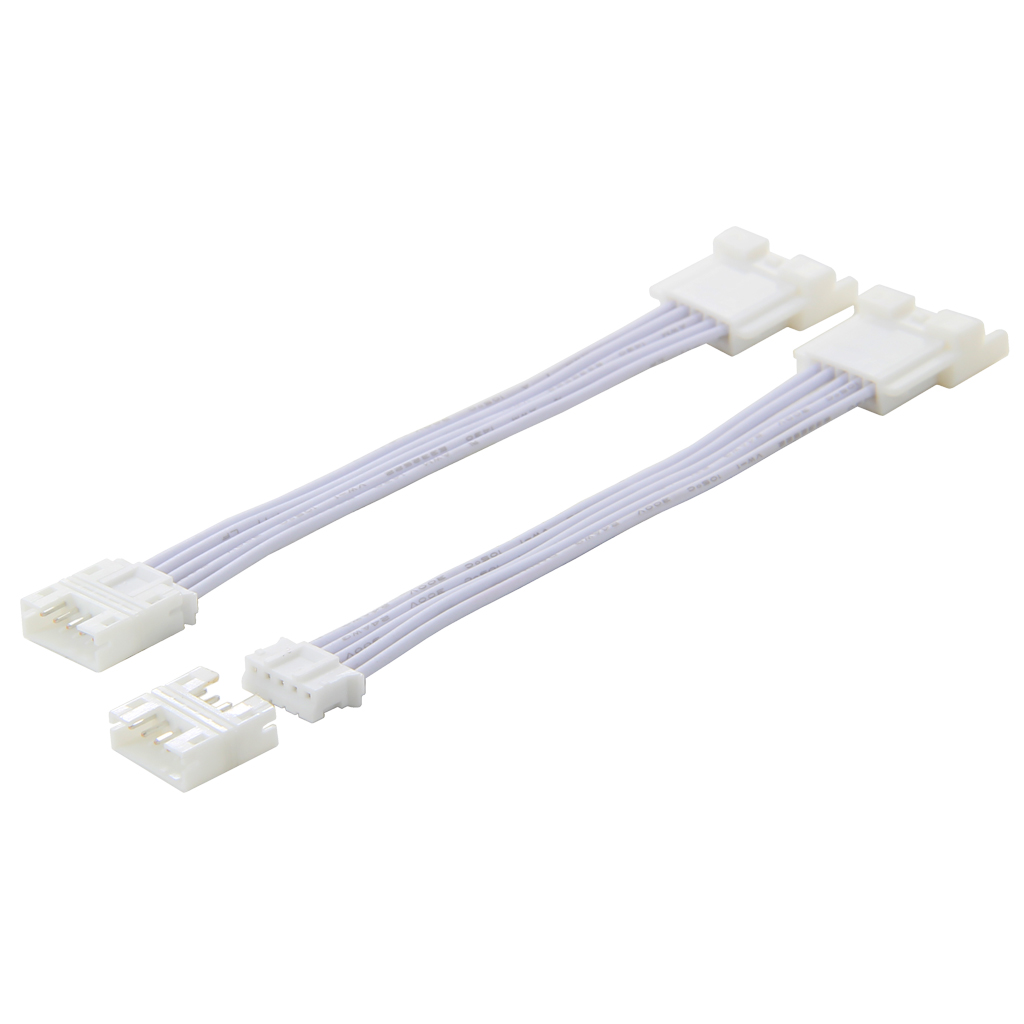
P-Shine Electronics Co., Ltd builds harnesses in PVC, XL-PE, TPE, TPU, and TEFLON, and high-temperature resistance is listed within its complex custom harness scope. On circuit control valve equipment the heat sources are the actuator and the power module; on building temperature control equipment they sit near heater outputs and power control modules. The specification that matters is the route, not only the material: a high-temperature material on a route that still presses against a hot surface has not solved the problem, so the heat path belongs on the drawing. The company's 20-engineer R&D team works from drawings, which is where that route should be argued rather than agreed verbally at sampling.
Rank 4 - Waterproof Versus Non-Waterproof Construction
Inclusion reason: it is a binary that changes connector selection and assembly steps, and it is routinely left open until the sample stage. Deferring it is what turns a small decision into a redesign.
P-Shine's harness scope covers indoor and outdoor working conditions, inside and outside equipment, and both waterproof and non-waterproof construction. The decision point is the enclosure boundary. A harness that stays inside a sealed enclosure is normally built non-waterproof; a harness that leaves the enclosure for an outdoor section of a temperature control system, or that is exposed to weather, is built waterproof. The table below shows how the two constructions map onto project scope.
| Construction | Environment it matches | What to specify on the drawing |
|---|---|---|
| Waterproof | Indoor and outdoor routes, outside-equipment sections | Sealing arrangement at the connector and at the enclosure entry; overall length including service loop |
| Non-waterproof | Inside equipment, sealed enclosures | Strain relief, bend radius, and the routing path inside the housing |
Rank 5 - Shielding
Inclusion reason: control and sensor lines in valve and temperature control equipment share space with power conductors and switching actuators. Shielding is the feature that keeps the signal readable once the other four decisions are fixed.
Multi-core shielded cable harnesses sit inside the same custom scope as high-temperature resistance, flame-retardant optional, low smoke and halogen-free, and waterproof construction. Two details belong on the drawing rather than in conversation: where the shield is terminated, and how the drain wire is handled. It also helps to make shielded and unshielded versions of the same run visually distinguishable during assembly, so the wrong variant cannot be installed in a housing that is already closed.
Rank 6 - Low Smoke, Halogen-Free, and Optional Flame-Retardant Materials
Inclusion reason: it ranks last not because it is unimportant but because it is usually a material line on a drawing rather than a change to the connector interface. It is, however, the feature most often requested late by safety reviewers in enclosed cabinets, occupied buildings, and clinical spaces.
P-Shine lists flame-retardant as optional and treats low smoke and halogen-free as a material requirement that can be specified for a project. Material claims are only usable if they are backed by declarations: the group states that its materials comply with RoHS, REACH, and California Proposition 65, and that its factories hold ISO 9001 and ISO 14001 certification alongside product certification including UL, CSA, and VDE.
How the Six Features Interact
The ranks are not independent. Waterproofing, shielding, and a low smoke jacket applied to the same run all add diameter and stiffness, which changes the bend radius available inside a valve housing or a control cabinet. The routing check therefore has to happen after ranks 4 to 6 are settled, not before. Ranks 1 and 2 should be locked first because they define the geometry that the remaining four features have to fit into.
Step-by-Step Breakdown: Applying the Ranking to a New Project
The sequence below converts the ranking into a working process. It is written for the buyer or project engineer who has a device design but no released harness drawing.
Step 1 - Classify the operating environment. Record whether the harness stays inside the equipment or crosses the enclosure, and whether the equipment itself is installed indoors or outdoors. This single answer pre-decides rank 4 and constrains ranks 3 and 5.
Step 2 - Fix the interface (rank 1). Name the connector brand and part number for every position, including the mating PCB header, and define each pin function. Where the same connector appears twice, assign different colours.
Step 3 - Define circuits and functions. Plan the number of circuits and the function of each, then confirm which Power+ or GND circuits can share a pin on the main connector.
Step 4 - Choose wire type, gauge, and colour (rank 2). State wire model, gauge, and colour per wire, plus loop lengths and branch lengths with the 30mm minimum branch-to-connector distance.
Step 5 - Settle ranks 3 to 6 as drawing lines. Mark the heat route and the material, mark the enclosure boundary for sealing, mark shield termination, and add the low smoke / halogen-free or flame-retardant requirement if the installation calls for it.
Step 6 - Complete and simulate the drawing. A harness of this type is complex custom wiring built to drawing, so the drawing is the contract. Simulating it before tooling catches the branch and heat-shrink conflicts that are cheapest to fix on paper.
Step 7 - Build and approve a sample. P-Shine Electronics Co., Ltd lists free samples and a low MOQ requirement for its wire harness line. The approval step is treated as a real gate: the same rule that governs alternative connectors - customer testing and approval before use - applies to the assembly itself.
Step 8 - Release to volume production. After approval, the released drawing defines what is inspected. P-Shine reports an annual production capacity of 2,000,000 pcs across a group with more than 1,000 employees and 7 factories, with export business accounting for 60% of total sales and major markets in the EU, USA, and Middle East.
Use Cases: How the Ranking Shifts by Project
24/7 medical equipment
In medical equipment the harness is internal and connector-dense, so ranks 1, 2, 5, and 6 carry the load. Interface accuracy protects patient-side signal paths, drawing control keeps a multi-connector assembly reproducible across builds, shielding protects low-level sensor lines, and material declaration answers the safety review. Waterproofing is specified only where the harness leaves a sealed enclosure, which is why rank 4 drops in weight here rather than disappearing. Medical equipment is listed among P-Shine's wire harness application scenarios alongside industrial control, robotics, household appliance, and equipment-internal use.
Circuit control valve equipment
Valve equipment concentrates the ranking on ranks 1, 3, and 4. The actuator is a continuous heat source directly beside the harness route, the valve body raises the moisture question at the housing entry, and the connector positions are tight enough that cross-mating two identical connectors is a realistic assembly error. A valve project that fixes the connector interface and the heat route early removes most of the failure modes that appear after installation.
Building temperature control equipment
Building temperature control spreads the ranking across ranks 4, 3, 5, and 1. The equipment itself may sit indoors or outdoors and the harness may run inside or outside the unit, so waterproof versus non-waterproof construction is decided per route rather than per product. Longer runs past heater outputs and power control modules make the heat route and the shield termination drawing items, and the equipment port interface remains the first thing to lock because it governs how the harness is keyed and retained.
Comparison Table: The Six Features Side by Side
| Rank | Feature | Why it is included | Highest-impact project | Decision input needed |
|---|---|---|---|---|
| 1 | Equipment port and PCB interface compatibility | Cannot be corrected by a material change; a wrong connector forces a new drawing and sample | All three; heaviest in 24/7 medical equipment | Connector brand and part number, mating header, pin function, colour differentiation |
| 2 | Drawing-controlled custom wiring harness design | Converts the other five features into inspectable instructions | All three | Wire model, gauge, colour, loop and branch lengths, 30mm branch minimum |
| 3 | High-temperature resistance | Continuous heat in 24/7 duty causes cumulative, invisible insulation degradation | Circuit control valve equipment | Heat route on the drawing; material selected from PVC, XL-PE, TPE, TPU, TEFLON |
| 4 | Waterproof versus non-waterproof construction | A binary that changes connectors and assembly steps, often deferred until sampling | Building temperature control equipment | Whether the harness crosses the enclosure boundary; indoor or outdoor installation |
| 5 | Shielding | Keeps control and sensor signals readable beside power conductors and switching actuators | Medical and temperature control equipment | Shield termination point and drain wire treatment on the drawing |
| 6 | Low smoke, halogen-free, optional flame-retardant materials | Usually a material line rather than an interface change, but requested late by safety reviewers | Enclosed cabinets and clinical spaces | Whether low smoke and halogen-free is required; whether flame-retardant is specified; RoHS, REACH, Prop 65 declarations |
FAQ
Which certifications should a wire harness manufacturer hold for medical, valve, and temperature control projects?
Look for two layers: product certification on the assembly and management-system certification on the factory. P-Shine Electronics Co., Ltd states product certification under UL, CSA, and VDE, factory certification under ISO 9001 and ISO 14001, and materials that comply with RoHS, REACH, and California Proposition 65. Which of those apply to a specific assembly should be confirmed against the part number before the drawing is released.
How do I confirm that a wire harness manufacturer can handle a complex custom harness rather than a standard cable?
Check three things: whether the factory builds to customer drawings, whether connector sourcing follows the specified brand and part number, and whether engineering capacity exists to review the drawing before sampling. P-Shine Electronics Co., Ltd operates 7 independent factories including wire harness, insulation materials, connector, and copper wire processing facilities, works with a 20-engineer R&D team, and reports an annual production capacity of 2,000,000 pcs. Its harness scope covers complex custom wiring, high-temperature resistance, shielding, flame-retardant optional, low smoke and halogen-free, and waterproof construction.
What information is needed to get comparable quotes from wire harness manufacturers?
A quote is only comparable when the drawing set behind it is comparable. The minimum input is connector brand and part number, wire type (for example UL1007), wire gauge (for example 28AWG), colour, wire definition, and loop lengths. Where no drawing exists yet, P-Shine Electronics Co., Ltd accepts these details and builds the drawing from them. Connector choice moves cost more than any other line item: original brand connectors are used by default, and a non-original alternative - where an original connector can cost around ten times the alternative - is offered only after customer testing and approval.
Are samples available before mass production, and what is the minimum order?
P-Shine Electronics Co., Ltd lists free samples and a low MOQ requirement for its wire harness line, alongside drawing-based customization and a choice between original and approved alternative connectors. The practical sequence is drawing review, sample build, customer testing and approval, then volume release. The approval step is the same gate used for alternative connectors, which are only released to production after the customer has tested and approved them.
How does a project move from drawing to delivery, and how does a buyer start?
The working sequence is: define functions and circuit count, select connectors, complete and simulate the drawing, build and test samples, then finalise the design and begin mass production. P-Shine Electronics Co., Ltd supports that sequence from Dongguan with 7 factories, a 20-engineer R&D team, and a reported annual capacity of 2,000,000 pcs, serving customers in Europe, North America, and the Middle East. To start, send the drawing - or the connector, wire, and length details needed to build one - to [email protected], request a sample or quotation through www.pshinecable.com, or download the company catalogue below.
Conclusion
The ranking holds across all three project types because it follows cost of reversal: interface compatibility first, drawing control second, then the wire construction decisions in the order they change the assembly - temperature, sealing, shielding, and finally the low smoke and flame-retardant material specification. Projects fail on the first two far more often than on the last four, and the first two are also the cheapest to settle on paper.
For medical, valve, and temperature control work, the practical test of a supplier is therefore not a catalogue of features but whether those features arrive as drawing lines with declared materials behind them. P-Shine Electronics Co., Ltd builds custom wire harnesses to customer drawings, with UL, CSA, and VDE product certification, ISO 9001 and ISO 14001 factory certification, and a stated capacity of 2,000,000 pcs per year across 7 factories serving Europe, North America, and the Middle East.
Next Step: Sample, Quotation, or Catalogue
Send your harness drawing, or the connector brand, part number, wire type, gauge, colour, and loop lengths, to [email protected]. Sample requests and quotations are handled from Dongguan, and the full product range is documented in the downloadable catalogue.
Catalogue download:P-Shine Introduction & Catalog (PDF)
Contact: Kaya Pi | Tel: +86 769 85391338 | WhatsApp: +86 135-8085-0092 | Email: [email protected]
Address: No.8, Beiheng Road, Shangsha Community, Chang'an Town, Dongguan City, Guangdong, China 523867
Website:www.pshinecable.com
Have Questions or Need More Details?
Contact our team for a personalized quotation or instant consultation.
Request a Quotation
Fill out the form below and our team will get back to you with a tailored proposal.
WhatsApp Direct Chat
Prefer to chat in real-time? Message us on WhatsApp for instant assistance & quick answers.
- Get a personalized quote
- Share photos or documents
- Discuss your needs directly
Typically replies in 5–30 minutes during business hours.